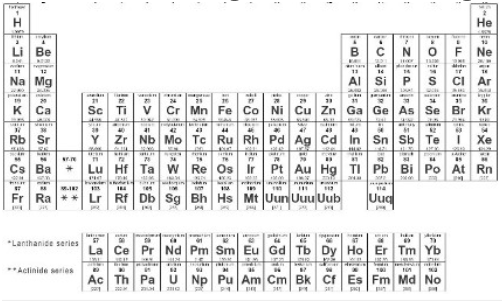
Structure of matter (25% of the SAT Chemistry subject test)•Atomic Structure, including experimental evidence of atomic structure, quantum numbers and energy levels (orbitals), electronconfigurations, periodic trends• Molecular Structure, including Lewis structures, three-dimensionalmolecular shapes, polarity• Bonding, including ionic, covalent, and metallic bonds, relationshipsof bonding to properties and structures; intermolecular forces such ashydrogen bonding, dipole-dipole forces, dispersion (London) forcesStates of matter (16% of the SAT Chemistry subject test) • Gases, including the kinetic molecular theory, gas law relationships, molar volumes, density, and stoichiometry • Liquids and Solids, including intermolecular forces in liquids and solids, types of solids, phase changes, and phase diagrams • Solutions, including molarity and percent by mass concentrations, solution preparation and stoichiometry, factors affecting solubility of solids, liquids, and gases, qualitative aspects of colligative propertiesReaction types (14% of the SAT Chemistry subject test) • Acids and Bases, including Brønsted-Lowry theory, strong and weak acids and bases, pH, titrations, indicators • Oxidation-Reduction, including recognition of oxidationreduction reactions, combustion, oxidation numbers, use of activity series • Precipitation, including basic solubility rulesStoichiometry (14% of the SAT Chemistry subject test) • Mole Concept, including molar mass, Avogadro’s number, empirical and molecular formulas • Chemical Equations, including the balancing of equations, stoichiometric calculations, percent yield, and limiting reactants. Equilibrium and reaction rates(5% of the SAT Chemistry subject test) • Equilibrium Systems, including factors affecting position of equilibrium (LeChâtelier's principle) in gaseous and aqueous systems, equilibrium constants, and equilibrium expressions • Rates of Reactions, including factors affecting reaction rates, potential energy diagrams, activation energieThermochemistry (6% of SAT Chemistry subject test) • Including conservation of energy, calorimetry and specific heats, enthalpy (heat) changes associated with phase changes and chemical reactions, heating and cooling curves, entropy. Descriptive chemistry (12% of the SAT Chemistry subject test) • Including common elements, nomenclature of ions and compounds, periodic trends in chemical and physical properties of the elements, reactivity of elements and prediction of products of chemical reactions, examples of simple organiccompounds and compounds of environmental concern. Laboratory (8% of the SAT Chemistry subject test) • Including knowledge of laboratory equipment, measurements, procedures, observations, safety, calculations, data analysis, interpretation of graphical data, drawing conclusions from observations and data. Organic Chemistry and electrochemical cells occupy substantial space in the textbook, but in my experience they are less prominent on the actual exam. Organic questions, when present, tend to be simple, so a brief review or selective omission may be reasonable. Color questions have sometimes numbered ten or more, so memorize the relevant colors. Recent papers have also emphasized stoichiometry, requiring plenty of practice to reduce solving time.