Watching students work so hard for the approaching finals, I really admire them.

In this round of final-exam question classes,
I think we worked through about 1,500 questions. If students sat down and did them alone, it might take two or three months.
We put everything into it and finished in about a month. Fifty questions a day for 30 days makes 1,500, and many of those were written-response questions.
We read all the written questions, explained the principles, and struggled through them one at a time. That makes 50 questions a day far from easy.
Perhaps because these students were preparing for finals, there were very few questions they could not understand. We focused on answering with more precision.
For example, using the correct significant figures and distinguishing between a molecular formula and a structural formula when writing or drawing an answer.
I also made initial-letter mnemonics for most of the written-response material. For example, “HHI.”
That stands for heat loss, heat absorbed, and incomplete combustion.
We completed one full pass through all the past papers from 2009 to 2018, including the options.
Classes ran all seven days of the week. I imagine the lesson fees were a considerable burden for parents.
Still, they seem to have joined because this was the final stretch. I felt as though I was grinding myself down too. Exhausting!
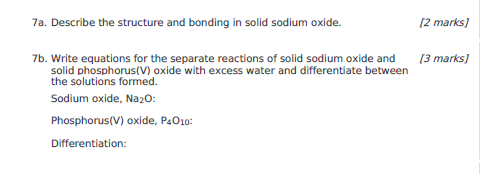
Imagine solving around 1,500 questions like the ones above.
After that, students worry. Nine out of ten ask, “I’ve forgotten everything we did at the beginning!”
I tell them that what we have done is only the beginning. Now they need to solve the same questions three more times.
I also tell them to organize everything in their textbook so that, at the end, they only need to take that one book with them.
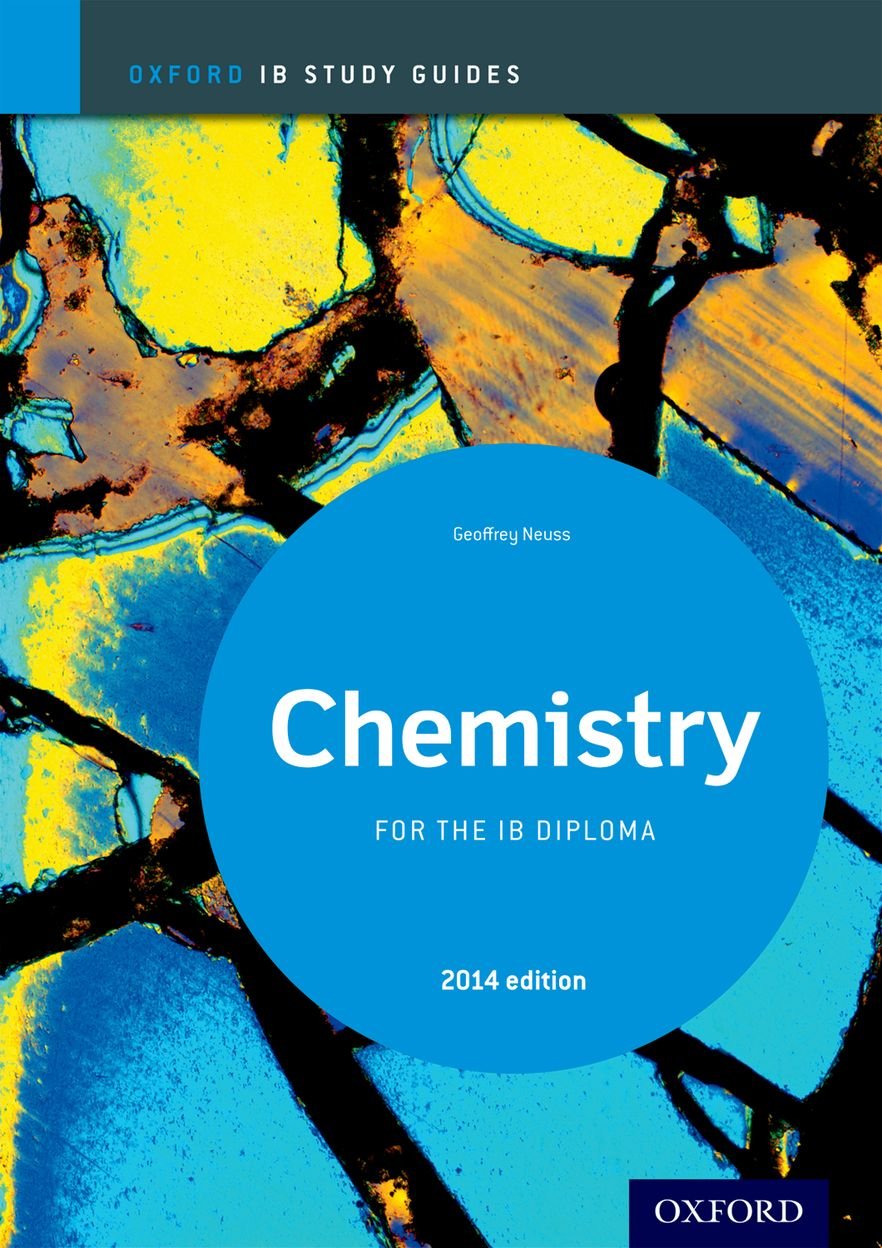
I usually use the textbook shown here for one reason: it is thin. Add the material it does not cover, and it becomes an excellent resource.
Some students reading this will also be preparing for IB finals. Test your understanding.
Here is a question: define a sigma bond. Two marks.
Some of you will know the answer, and some will not. If you do not, you need to work hard. If you do, you are on the right track.
You should be able to write something like, “A sigma bond forms through end-on overlap of orbitals, with the shared electron density along the line joining the nuclei…”
In my experience, however, few students prepare until written answers come out fluently when asked.
Even high-achieving students at international schools in Korea are often unsure where to begin.
So build a steady habit of practicing written responses. Of course, you must understand what you memorize.
Unless you are someone who remembers everything at a glance, it helps to memorize through understanding or initial-letter mnemonics.
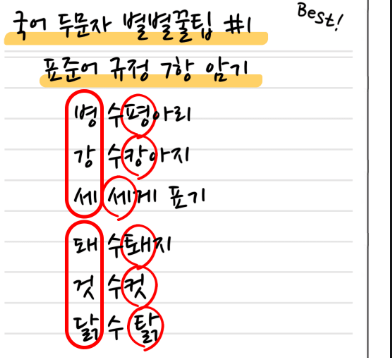
The example above is one such mnemonic. I use quite a few of them in IB Chemistry lessons.
If you learn the major written-response points with mnemonics from around the second year of high school, you only need to add the finer details later.
Students often remember the mnemonics even a year later. Strangely, even when they forget other material, they retain the written answers taught that way.
For example, if asked to write a six-mark answer on graphite, fullerene, and diamond, my students memorize the material so they can write more than ten lines
without having to stop and think. It amazes me to see them still remember it a year later.
The same applies to color in transition-metal compounds. Give them one mnemonic, and they remember it even when other material has faded. Haha.

My approach to preparing well for Chemistry finals is repeated past-paper practice and organizing the textbook.
There are many other question sources, but you can leave those until after you have finished the past papers.
Work through ten years of past papers and understand every question. Then organize the material in your core textbook.
Once you have done that, find questions from other sources for extra practice.
InThinking has good questions, and I also recommend practicing with questions supplied in different workbooks.

Organizing your core textbook and working through ten years of past papers three times gives you a lot of confidence. You rarely get stuck because you do not know the material; mistakes tend to come from misinterpreting a question
or from small slips. Of course, an unexpected question beyond what you prepared may be unavoidable. Even then, a mistake need not cost
very many marks.
If dropping IB Chemistry is not an option, I strongly recommend working through all the past papers.
And if you run into difficulty, ask me for help.
I can help you cover the full syllabus.
The AP and SAT Chemistry season is approaching as well.
I have taught SAT and AP Chemistry so many times that I do not need as much lesson preparation for them now. Haha.

Again, you need plenty of past-paper practice.
No matter how many textbooks you read, it is hard to achieve a strong score without working through past papers.
For SAT Chemistry in particular, I think I had around ten students earning perfect scores every six months.
AP only has one exam sitting a year, so I did not have quite so many students, but I think roughly 70%
earned a 5 each time.

For AP Chemistry too, the first priority is to work carefully through ten years of past papers.
After that, try other questions or the free-response questions made available for free.
Past papers first, always. Haha. Materials were available on my old resource board: https://www.jjangji.org/board/.
https://www.jjangji.org/board/ ↗
The past papers themselves are not easy, so it helps to work through them with explanations. Of course, students who manage well alone can do everything themselves from beginning to end.
In AP, the free-response questions can actually be easier. They often ask about basic principles.
The multiple-choice sections contain quite a few difficult questions. If you handle those well, a high score should be within reach.
Class schedule
Curriculum
Time
IB Chemistry final-exam questions
10 sets of past papers, including the options
Every day for one to two months
SAT Chemistry past papers
15 sets of past papers
Fewer or more than 15 lessons, depending on the student
AP Chemistry
10 sets of past papers
More than 10 lessons!
That is a summary of the subjects I focus on.
Thank you.