Yesterday, two middle-school students messaged me to say they had earned 5s in AP Chemistry.
I feel awkward asking older students about results, but because these students were still in middle school, I asked as soon as the results
were released. Both replied that they had got 5s.
So today, let's look at how middle-school students earned an AP Chemistry 5—a score that even high-school students find difficult.
View original messages
.png?type=w773)
Most middle-school students haven't studied Chemistry before, so they first need an introduction to the subject as a whole.
At that stage, many enthusiastic students make the mistake of buying a textbook and trying to read the entire thing.
From my experience, reading every page is often a poor study method.
Look at the contents and confidently skip what you already know. That's how you reduce the workload.
View original messages
.png?type=w773)
The reason is that reading an entire textbook doesn't automatically make you able to solve questions.
Of course, some students can read the textbook and immediately solve questions well. But most can't.
That's why I think the best method is to move through the textbook quickly and solve plenty of questions.
In particular, doing many past-paper questions and similar questions is the best way to score well in AP Chemistry.
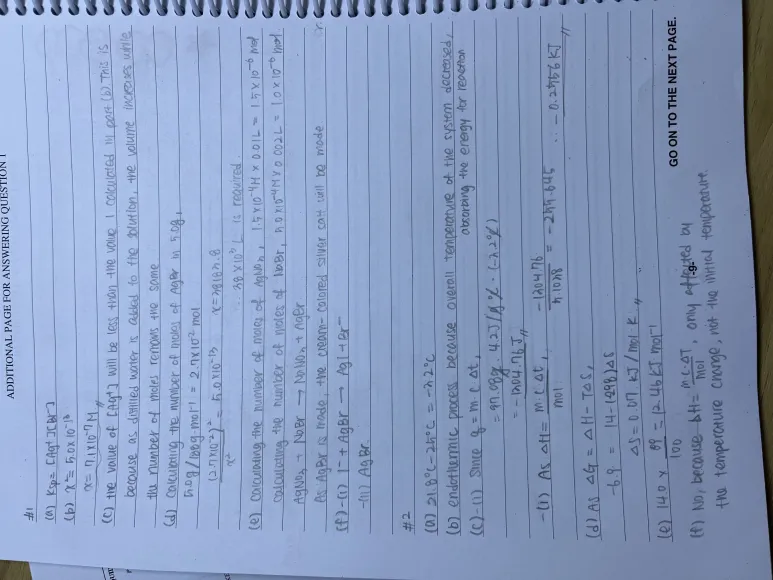
There is a method to solving questions too. Don't just work through them blindly.
If you get most questions right, that's one thing. But your mistakes need attention.
Resolve every mistake properly. Be sure you understand why you got the question wrong before moving on.
Otherwise, doing the questions makes little difference—in other words, your score doesn't improve.
Ultimately, you need to make understanding your mistakes a top priority.
You can look up the relevant material in a book, or you can ask a teacher.
For most students, I'm confident the latter is much more effective. Therefore,
I can also say confidently that private tutoring can help many students improve their scores more quickly.
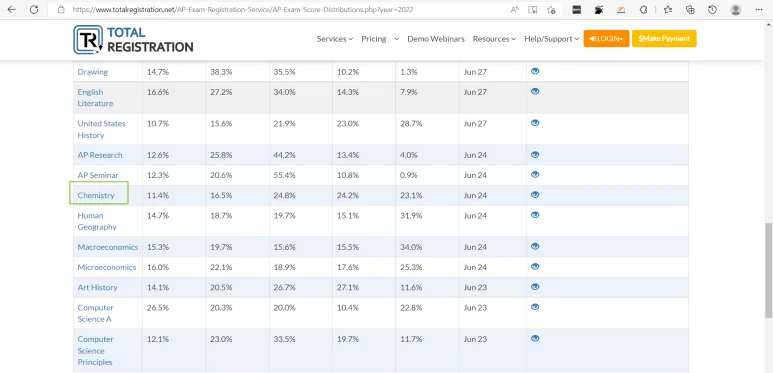
You also need to understand that AP Chemistry isn't easy. At the time of this post, I described it as an exam in which only around 10 out of 100 students received a 5.
So you need something beyond the ordinary. Since all the questions are in English, the language shouldn't be an obstacle.
If understanding the wording is difficult or takes too long, you need to work on English before prioritizing AP Chemistry.
Good English is a baseline here, not a special advantage in itself. What distinguishes students is ultimately their Chemistry ability.
To recap the method so far: review a basic textbook quickly, then do many questions.
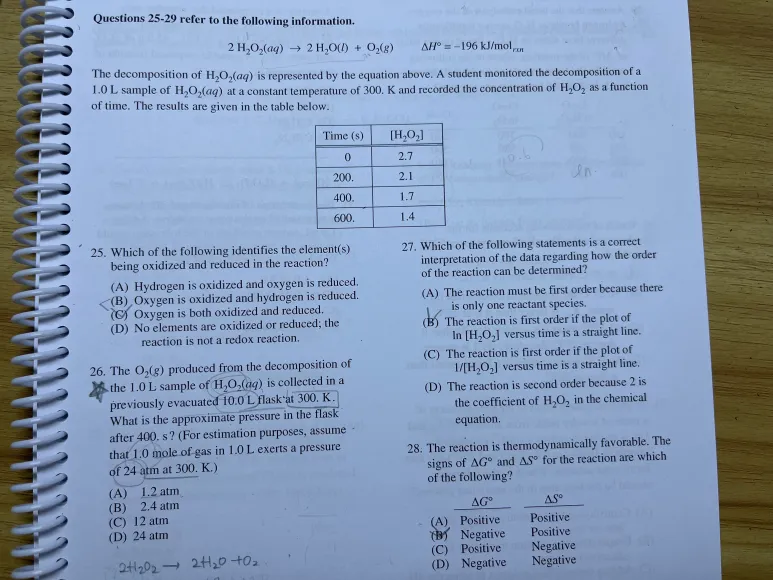
But you should distinguish between multiple-choice and free-response preparation.
For multiple choice, extensive practice and understanding can take you far. For free response, you also need to learn how to write answers properly.
What matters in free response isn't writing long answers or having beautiful handwriting. It's getting the answer right and giving the reasoning that supports it. If a tutor says pretty handwriting or writing more automatically earns better marks, I suspect they haven't seen enough student outcomes. Someone who has taught more than 100 students and followed their results is unlikely to say that.
This has been a brief explanation, but let me conclude.
The two AP Chemistry students were in one class, and I think extensive question practice explains why both earned 5s.
Neither had studied Chemistry before. They started from zero.
But they steadily followed what I taught and completed their homework without complaint. They simply kept doing that for more than six months.
After teaching many students, it goes without saying that diligence is a major strength among those who score well in AP or IB Chemistry.
More than 10 students took AP Chemistry lessons. About half earned 5s, and the rest earned 4s.
With the students who didn't get 5s, I could often sense it during lessons: this student may not reach a 5.
In my experience, students who missed lessons didn't get 5s. Those who attended consistently and asked questions did.
This post has become rather long. I've been busy with various things recently and haven't written much. Lessons have increased quite a lot too.
My energy keeps declining. I'm exercising, but it's really tiring.