I feel as though I've looked through hundreds of IAs. I'm so tired of them that just seeing one almost makes me feel sick.
It's the season for finishing IAs. Teaching lessons and then being asked to review IAs as well really
leaves my head spinning.
View original messages
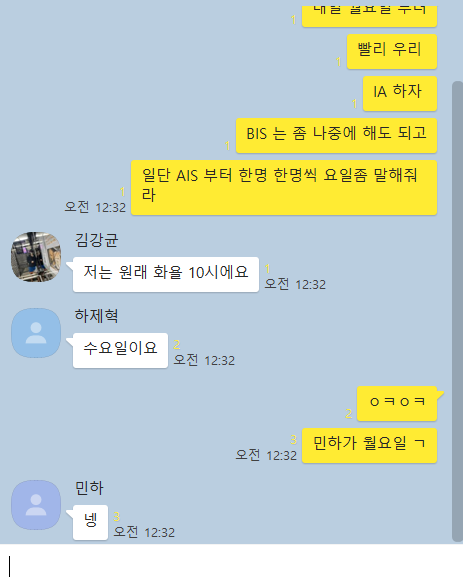
Because lessons take up the daytime, I review IAs over Zoom late at night.
Some students want me to review a DOCX, others a Google Doc. It's quite chaotic.
Some just ask me to read through the whole thing, haha.
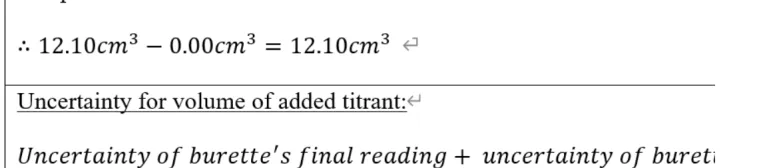
Recently, I seem to have been reviewing several IAs a day. Few students have finished and simply want reassurance.
More often, hardly anything is written, or there are large gaps to fill. So how do I help?
Honestly, I end up providing help so extensive that it is almost like writing it myself. Of course, I don't actually write it for them.
I tell them what to write, what to delete, what to put where, and how to structure it.
Students find IAs difficult, but after I look at one, it usually takes about an hour to establish what needs to be written and the structure.
And if even that doesn't work? I end up explaining some of the content. I write it in Korean rather than English, because writing it in English would be ghostwriting.
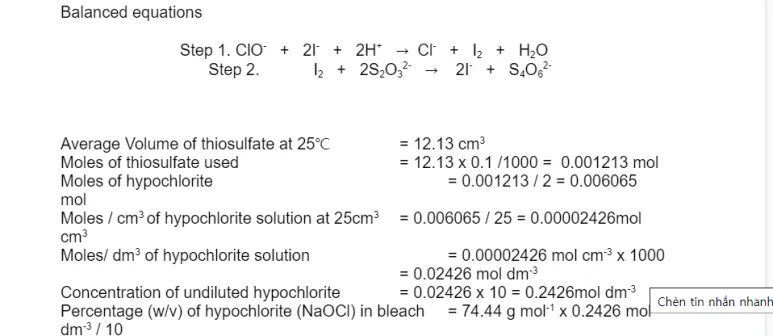
As shown below, haha. If I sat down and wrote one myself, how long would it take? After doing this so often, I could produce an IA in about three hours.
Many students don't know what to put in the Introduction or Personal Engagement. They can write about an experience from when they were younger,
but it may be more important to explain how the experiment could be useful in the wider world. It helps to write from that broader perspective.
Students sometimes try to invent a story about having been ill for some reason when they were young. Even that is difficult for them, so they ask me
for help. What can I do? Giving detailed directions inevitably means I become involved in quite a lot of it.
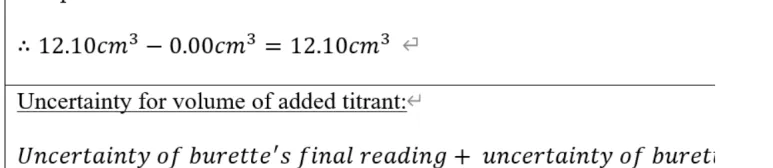
Students also genuinely struggle with the calculations. In particular,
calculating uncertainty is where that difficulty peaks. Most can't resolve it alone, so I need to look at it.
To calculate anything, I have to read through the whole experiment. If nothing had been written, it would almost be easier to write from the beginning, but when something has been roughly drafted,
it takes considerable time just to understand it.
I need to read through what they did and how they did it before I can clearly judge whether the calculations are right.
A well-written IA isn't hard to read. But an unfamiliar experiment or a poorly written report can leave me completely confused.
Even though I teach only Chemistry, being handed an experiment I've never seen and an unclear explanation can be mentally overwhelming.
Then I have no choice but to ask, 'What exactly have you written here?' They explain, and only then does it begin to make sense.
If an outside reader can't understand the report, it hasn't been written well. So we start revising from the top again.
We remove unnecessary sections. Finally, the IA becomes somewhat understandable, and then I review the calculations.
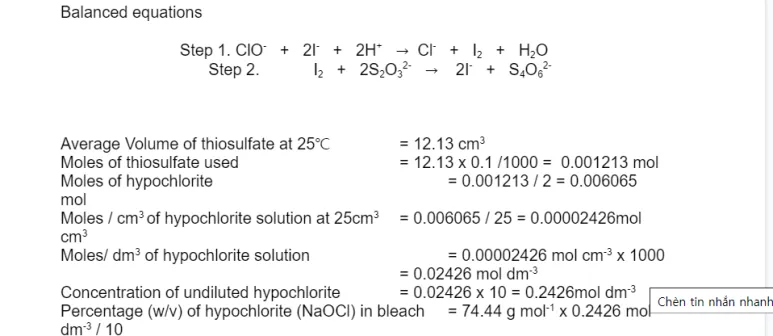
But if a student has done the experiment and can't do the calculations, what am I supposed to do? I end up doing them. Usually students do them themselves, but
occasionally someone can't. Then I feel I have no option but to do them. Of course, because students write the IA while taking lessons, they see it as help,
but honestly, the extent of my involvement often comes close to writing it for them.
And receiving recognition in a youth academic competition isn't especially difficult.
I don't think any science report I helped with failed to receive an award.
That's because it is essentially the kind of essay written for IB, but in Korean—something I work with every day.
It may seem impressive to students, but these are fairly ordinary reports to me, and a little help seems enough to earn recognition.
Of course, that doesn't mean first, second, or third place. Those awards require more focus and effort, and I sometimes wonder whether we need to go that far, haha.
IA season is almost over. I hope everyone finishes well.
When I have many lessons, though, I may not handle new lesson consultations. I also don't discuss subject questions with students who aren't mine.
Please understand: I barely have enough time to help my own students!