When discussing IB performance, we need to consider school test results, final exam papers, and the IA.
Schools organize their courses differently. They usually give students several practice IAs,
but the system varies, and some students seem to get little practice.
International schools often have students complete around four practice investigations before the final IA.
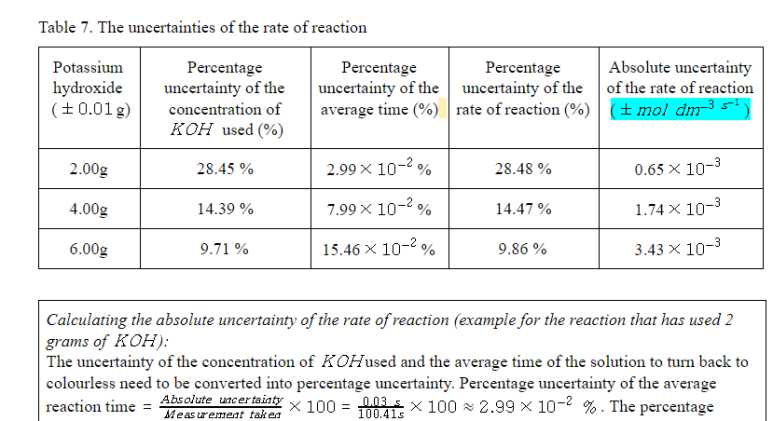
The work above belongs to a girl at an international school. She is meticulous and puts considerable pressure on herself.
She is just entering her final high-school year, and extensive school practice has enabled her to write an IA in only a week.
For this IA, she asked me about uncertainty, Organic Chemistry, and Biochemistry.
She alternated between asking questions and writing, and finished in a week.
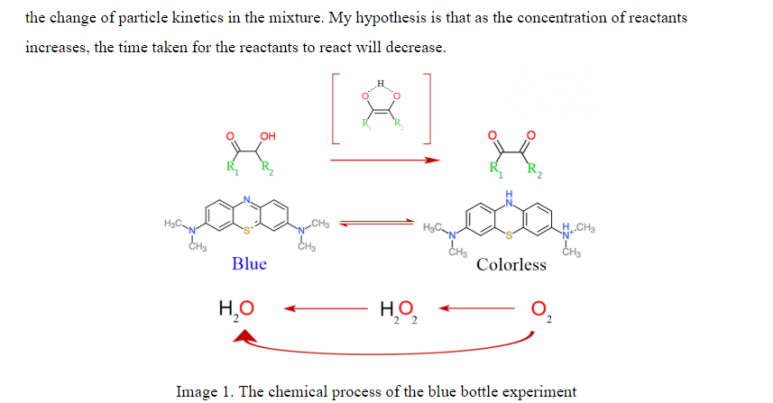
To write accurately and quickly, asking an instructor is very helpful. The more useful questions, the better.
Most Chemistry questions concern Organic Chemistry.
For the IA above, I received many questions about color changes. It involved the Biochemistry option then examined in Paper 3.
Organic Chemistry and Biochemistry can be difficult to grasp for students just entering their final year.
There is one obvious solution:
ask. Ask before writing; if you write without understanding, it can be hard to fix later. Haha.
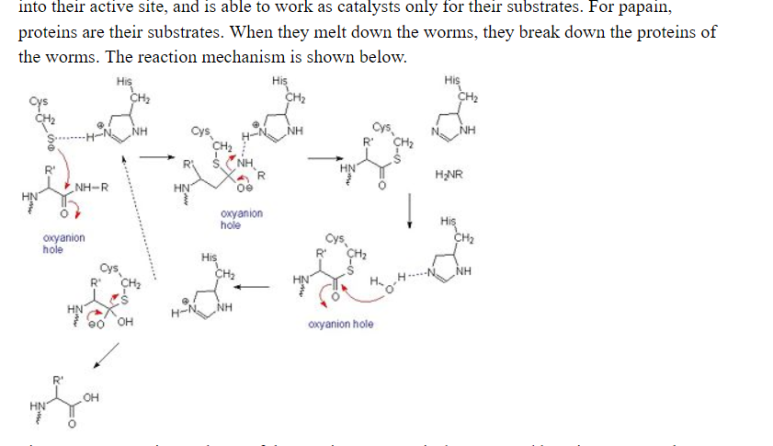
The IA above belongs to a student who entered veterinary school.
We worked together eight hours a week.
They consistently attended four hours of Chemistry and four of Biology.
This was a strong student, with SAT Chemistry 800 and SAT Biology 780.
Even so, they did not understand the Organic Chemistry material shown above.
Naturally, they needed to ask an instructor, who needed to explain it clearly.
The instructor must know the subject.
So a good teacher nearby helps when writing an IA.
But avoid pouring too much energy into it.
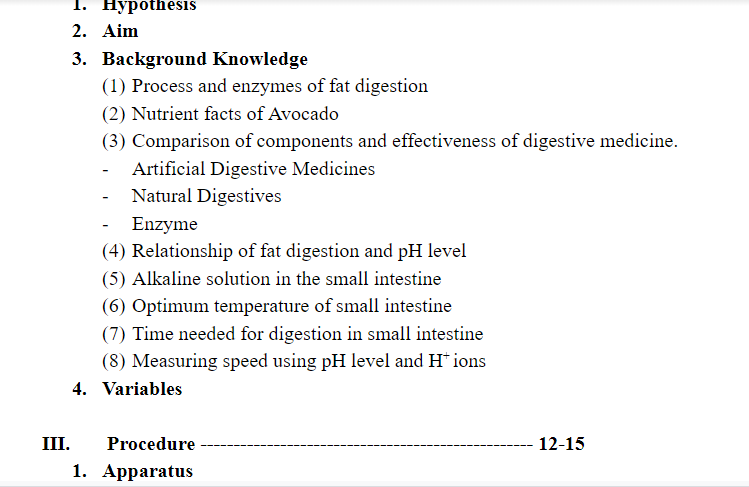
This student’s IA exceeded 40 pages. Reducing it afterward took longer than writing it.
I think we spent around three months writing and revising. It was tiring for me too.
To write a good IA, look at plenty of examples and learn from their structure.
Once you have a feel for it, begin writing.
https://www.thinkib.net/chemistry/page/16592/practical-scheme-of-work-ia-
https://www.thinkib.net/chemistry/page/16592/practical-scheme-of-work-ia- ↗This resource covers IB Diploma Chemistry practical activities and internal assessment, including designing a practical program and more than 30 investigations covering many required components.
www.thinkib.net
IB Chemistry: Practical scheme of work & IA Virtually everything you need to know about practical activities and internal assessment for IB Diploma Chemistry.How to design and set up your own IB Chemistry practical programme.Full details on more than 30 excellent practicals (including many to cover all the mandatory components) for the Core/A... www.thinkib.net ↗InThinking can be very helpful. Access costs money, though. Haha.
It includes basic experimental resources, but analyzing and understanding them alone is not easy for students.
An instructor can help here too. If Chemistry were the student’s only subject, it might be different,
but with so many subjects, they cannot attend to every detail individually.
Another site contains many pieces of student work.
http://www.markedbyteachers.com
http://www.markedbyteachers.com ↗
This site also requires registration and payment for access.
You can consult various IA examples there.
I think students may find it difficult to manage all these materials alone.
It makes sense for the instructor to select appropriate resources.
There are free examples too, so take a look.
https://docs.google.com/document/d/1MTvj9MlQMK7FpGFcqGjZoROh-1eaIVhZRWchJAALkkE/edit
https://docs.google.com/document/d/1MTvj9MlQMK7FpGFcqGjZoROh-1eaIVhZRWchJAALkkE/edit ↗
The link above contains IA examples.
Looking at examples like these should give you a feel for the writing.
After spending some time on the IA, you need to devote even more time to school tests
and the final IB exams.
I think IB performance begins to take shape during the holiday.
Advance study in the holiday helps, but choosing the right academy and instructor matters.
An unsuitable holiday course wastes time and money. Even if it costs more, a proper course is preferable.
If the course gives you a sound direction, you may be able to continue alone afterward.
But independent study requires ability and effort, and it is not easy.
So I recommend at least a weekly check-in afterward.
Once the introductory course is finished, move directly to questions. For IB, past papers are the obvious resource.
There is a large collection of past questions. One source is
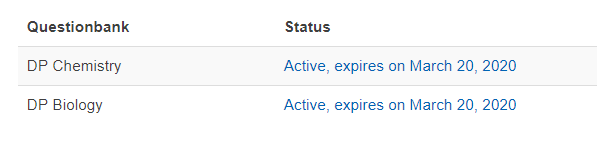
Questionbank.
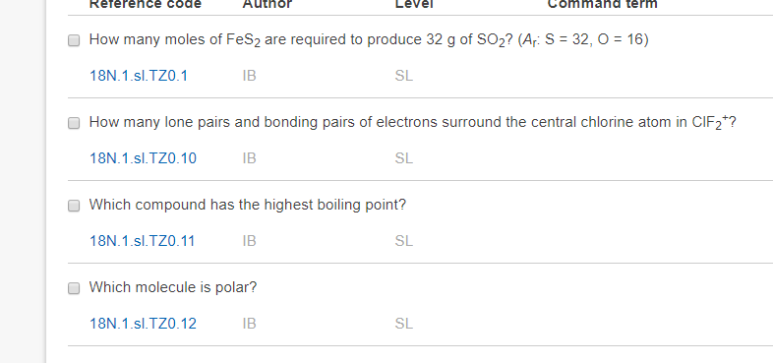
As shown below, it allows questions to be selected and arranged.
But doing all of that can burden the student.
Again, help from a teacher is useful.
For my students’ convenience,
I compiled a book. The material runs to roughly 1,200 pages; double-sided printing gives 600 sheets, and splitting it makes 300-sheet volumes.
I compiled all the past questions from 2009 to 2018 into a 300-page book and work through it with my students.
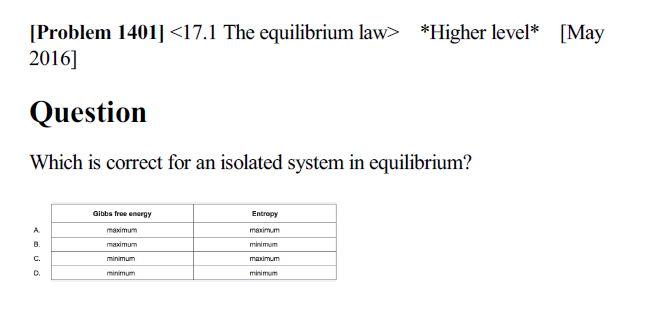
The book identifies the question number, year, and topic.
I made it that way to make each question’s context clear.
I work through the Chemistry and Biology past questions.
We do about a third during the holiday and finish early in the school term.
Can other students catch up? I think that head start is extremely difficult to overcome.
Apart from my students, I do not see students here completing the past papers early in the term.
Eventually, my students end up competing with one another.
I tell students to mark their mistakes clearly during question practice. That way
they can save time later. Saving revision time during the exam period matters.
They should not have to study everything again from scratch.
Clear markings allow selective review.
I emphasize reviewing mistakes instead of panicking and starting over.
Once past-paper work is reasonably secure, I provide InThinking questions like those below before school tests.
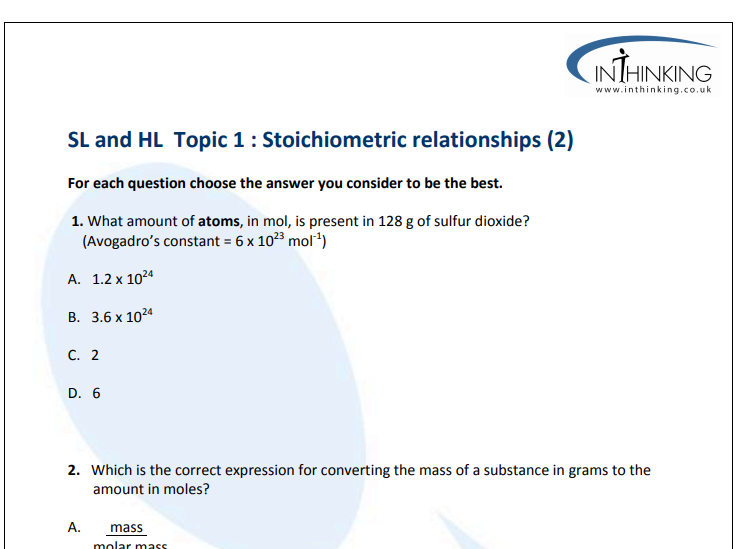
I have students solve around 1,000 questions per term.
What happens when a Year 1 student solves 1,000 Chemistry questions?
In my experience, they can earn 7s consistently and work faster too.
My goal is to help students reach that level.
Multiple-choice performance matters, but written responses are what students find difficult.
There are techniques for writing them. Consult the mark schemes closely.
You need the required key concepts, not simply your own thoughts.
A common misunderstanding is that a longer answer earns more marks. It does not necessarily do so.
Initial-letter mnemonics help with written-response revision.
Here is one for allotropes.
I created it and teach it to students.
A — angle.
B — bond.
C — carbon atom.
D — delocalized electrons.
S — sp hybridization.
Remember ABCDS, then expand the points when the relevant question appears.
I use fewer than 20 such Chemistry mnemonics. Organize them and apply them to written questions.
For Biology, there are around 100, which can cover many written-response topics.
Students think reading lots of books will make them good, but that often is not enough.
What matters is how much you can actually recall.
If you have read widely but retained little, a strong score is difficult.
So build your memory steadily and practice using it.
Managing that alone is difficult. Finding a good tutor matters greatly.
Ask plenty of questions. Ask about wrong answers and anything even slightly unclear.
If the teacher cannot answer, consider whether another teacher would suit you better. An unusual or out-of-syllabus question
may reasonably be difficult to answer, but repeated inability to answer ordinary syllabus questions is worth questioning.
You may judge a teacher by taking a lesson, but asking about unfamiliar questions gives a clearer picture.
A good teacher should answer most questions and make the explanation easy to understand.
If explanations are too long or too difficult, lessons can become less efficient than studying alone.
I recommend asking questions when choosing a teacher.
That helps you judge both their ability and whether they suit you.
When these conditions come together, students can reduce mistakes considerably.
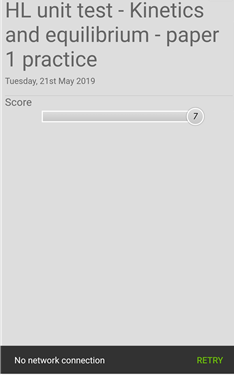
The example above shows a student who went from a 4 in IB Chemistry to a 7.
I am grateful to this student for showing what following the course can achieve.
To summarize my approach to strong IB results:
1. Find a good tutor.
2. Use holiday courses well.
3. Work thoroughly through questions.
4. Understand the investigation before writing the IA.
Study approaches for IB Chemistry and IB Biology.
Please contact me whenever you have questions about IB Chemistry or IB Biology.