In this year’s exams, four of six SAT Chemistry students earned a perfect 800.
Two students took SAT Biology, but neither received an 800.
Three of four AP Chemistry students earned a 5.
One AP Biology student earned a 4. The numbers are too small to draw broad conclusions from, but
over several years, SAT Chemistry has produced the most perfect scores in my experience.
AP Chemistry comes next,
followed by SAT Biology and then AP Biology.
My perceived difficulty ranking is SAT Chemistry < AP Chemistry < SAT Biology < AP Biology.
Why might that be?
First, SAT is easier than AP because all the questions are selected-response. There are true/false questions, but those are still essentially selected-response.
AP written responses vary greatly in difficulty from student to student. In Biology, English expression adds another dimension.
Although key terms are what matter, students with weaker English still feel limited when writing responses.
Second, I find Chemistry easier than Biology because it is harder to build a Biology score quickly.
It depends on the student, but properly learning the Biology content takes around two months.
Even after combining two of the best-known introductory books, students encounter completely unfamiliar questions on the exam. Haha.
Biology simply contains a lot of material. By contrast, very few students who studied Chemistry with me for two months failed to exceed 780 on SAT or earned below
a 4 on AP. That is why, in my teaching experience, Chemistry has been easier.
Let us look at how students earned top scores in each subject.
First, SAT Chemistry. It is a subject in which I can help a high proportion of students reach a perfect score.
I think around 70% of the students I have taught earned one.
The main reason seems to be the abundance of resources and opportunities for sufficient practice.
In particular, I have students solve around 2,000 questions using official and adapted past papers.
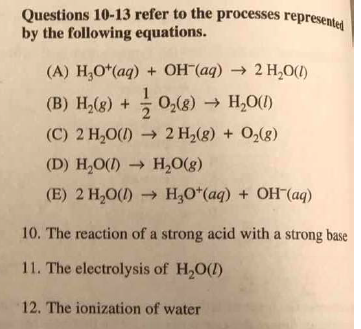
Two thousand sounds simple to say, but completing them takes considerable effort.
I sometimes have students do 200 a day and finish in ten days. Getting them to that stage is the difficult part.
To reach that level, we must first work quickly through plenty of foundational questions.
A student able to solve 200 a day from the start probably does not need an instructor.
Most need the basic theory, so I explain foundational questions
and help organize their understanding.
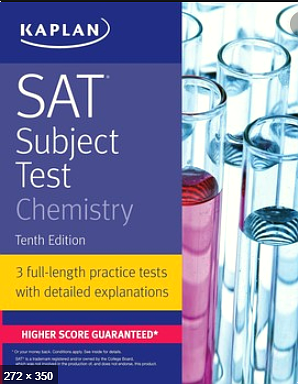
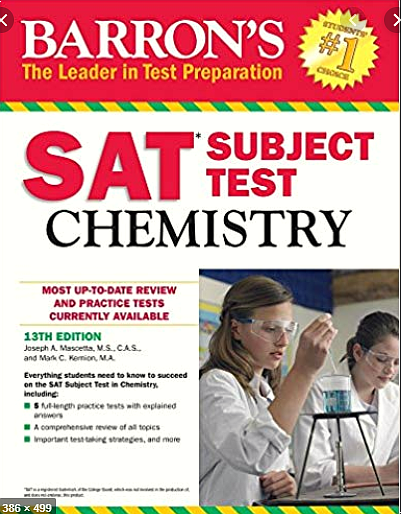
The books are Kaplan Chemistry and Barron’s Chemistry, though I am not particularly enthusiastic about recommending them.
I explain the material in about a week. That is too short to read every line.
Once the foundations are reasonably secure, intensive question practice begins.

We start with adapted 2017 and 2018 questions and work through around 20 sets of modified past papers.
After more than 1,000 questions, many things change.
A paper that initially took over two hours gradually takes less than one.
The number of mistakes can fall dramatically. I do not mean that a student missing 50 questions slowly goes to 40
and then 30.
I often see someone go from 50 wrong to fewer than ten. SAT Chemistry questions overlap considerably,
and students improve their technique through practice while I explain what they do not understand. Their skills can rise sharply.
I do not think there is a better SAT Chemistry strategy than plenty of questions. But students must ask about mistakes and uncertain answers, so they need an instructor able to support that work.
My perfect SAT Chemistry scorers range from the second year of middle school to the final year of high school in Korean terms.
Some parents started in the first middle-school year. We went more slowly, and the students earned perfect scores in the second year.
Even without a perfect score, can classmates catch up two or three years later? From what I have seen, that head start can be very hard to close. Students exposed to Chemistry and Biology early often retain the material for years.
View original messages

For AP Chemistry, I teach the foundations more carefully than for SAT. The syllabus is not enormous, but it demands deeper understanding.
I usually use Cracking and Barron’s, although neither matches the actual exam perfectly.
Learning the theory matters, but textbook explanations do not translate directly into past-paper performance.
Working carefully through the questions may improve the chance of a top score more than concentrating only on the prose.
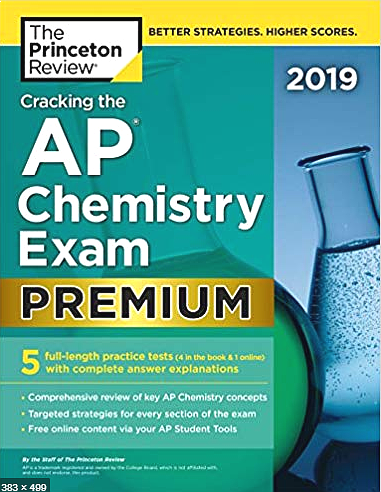
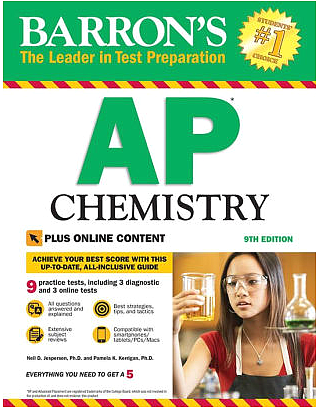
Since no single book seems ideal, I think using both is helpful.
We solve all the written-response and multiple-choice questions in both. I use the shorter book for the basic theory,
and then work through all the questions in both books. Even that is not easy.
It takes substantial homework and hard work during lessons to finish.
Once the theory and those two books are covered, it is time for the most important part:
modified past papers. Haha.
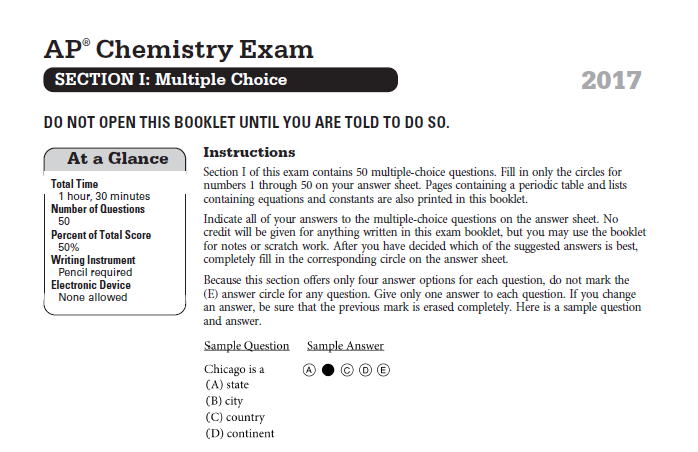
We start from 2018 and keep going. I explain unfamiliar questions as simply as possible.
An instructor should have practiced enough to know the past papers thoroughly, because students need answers when questions arise.
Again, a good instructor nearby can make a major difference to progress.
AP also requires practical exam experience: solving actual past questions or close equivalents.
If students only study theory and do not practice enough questions, I do not expect good results.
Even imperfect theoretical preparation can sometimes lead to a 5 if a student has become strong at solving exam questions.
Many students who solved large numbers of questions in my lessons earned 5s in AP Chemistry.
At first, however, they often feel discouraged by published workbooks.
The written-response questions in those books can be very difficult. Actual past questions are often clearer and easier,
so students regain confidence when they move to past papers or adapted versions.
I usually plan around five months for AP Chemistry: two months on the foundations, followed by all the workbook questions and then
the past papers. Students struggle with the workbook at first, then build confidence with the exam questions.
They often go into the exam in that state. If the preparation has progressed smoothly and past-paper scores are solid, a 5 becomes more likely.
Many of my top scorers are in the first through final years of high school.
Now let us look at SAT Biology, which I find a little harder.
A perfect SAT Biology score is not easy, but it is not impossible.
I have not had huge numbers of perfect scorers, though most students seem to earn at least 750.
For someone starting from nothing, SAT Biology takes considerable time because of the volume of material.
A fairly standard textbook choice
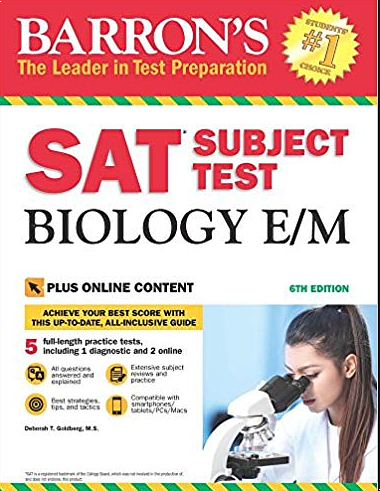
is Barron’s. The exam offered E and M options; we usually chose M, where students tended to do better. In practice, I found M easier.
Reading all of Barron’s is a burden, so I explain the material in a condensed form and mark the important passages.
Then students solve every question in it. Only afterward do we move to past papers. The foundations matter because
whichever textbook you use, Biology will still present questions you have never seen.
Students need to experience that. Reading many books just to try to cover every possibility is not, in my view, a good strategy.
Instead, solve past papers and adapted papers under exam conditions, and become familiar with material that was absent from the textbook.
Then extend your study a little into the related concepts.
Do not increase the workload indiscriminately. Learn what appears in exam questions but is missing from the book. That is difficult for students to organize alone,
so the instructor should help.
One Barron’s book plus roughly 1,500 past and adapted questions can bring students to a solid level: when given questions similar
to the actual exam, they miss no more than ten. After completing the 1,500 questions and understanding every mistake, a final review and some luck may bring an 800.
Biology still has an element of uncertainty: unfamiliar questions may appear. A wrong guess might mean 790, while a correct one gives 800. Under the scoring system then in use, omitting a small number of uncertain questions could also help protect a score.
My perfect Biology scorers worked hard and also had some luck.
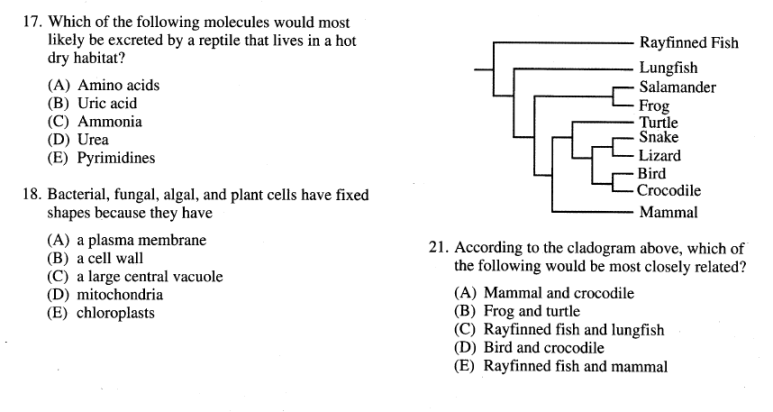
The examples above are extracts from past papers. It takes a great many such questions to approach a perfect score.
Remember that exam practice builds performance; avoid concentrating exclusively on theory.
This is even more apparent in AP Biology, discussed below.
I have had middle-school students earn perfect SAT Biology scores too, though most were in the first or second year of high school.
Finally, AP Biology. I am posting a message received last year.
I saved it because I was happy; I think it was around the time I started blogging.
View original messages

AP Biology is difficult in both its written and multiple-choice sections. SAT Biology is hard too, but AP often leaves you asking whether an option can really be the answer. After checking or hearing an explanation, it makes sense; while solving it, the choices can be extremely confusing.
Again, use one core textbook and analyze past papers carefully. The textbook has substantial content and may take two or three months, though students with prior knowledge can finish faster. Once the basics are secure, move straight to past-paper practice.
The free-response questions are publicly released, and writing answers repeatedly is helpful.
The odd thing is that studying the textbook thoroughly does not automatically enable you to solve past questions like those below.
AP Biology requires its own kind of problem-solving practice.
That does not come from reading alone. Students need many questions and careful past-paper analysis, which is also difficult to manage independently.
So seek help if you have a good instructor available.
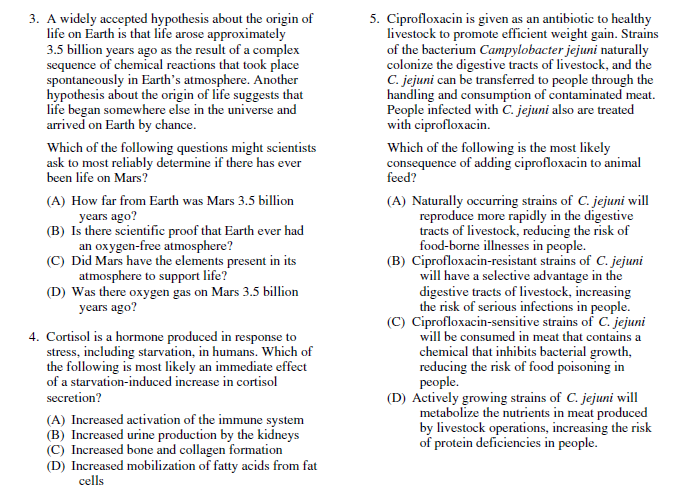
How should you practice? I think repetition is best—but I do not mean repeatedly reading the textbook.
Revisit the same questions and immediately ask an instructor about anything uncertain or unclear.
You need to understand the past papers thoroughly.
The image above shows an AP Biology multiple-choice question.
It looks demanding even to read.
By contrast, the SAT Biology example below looks much simpler.
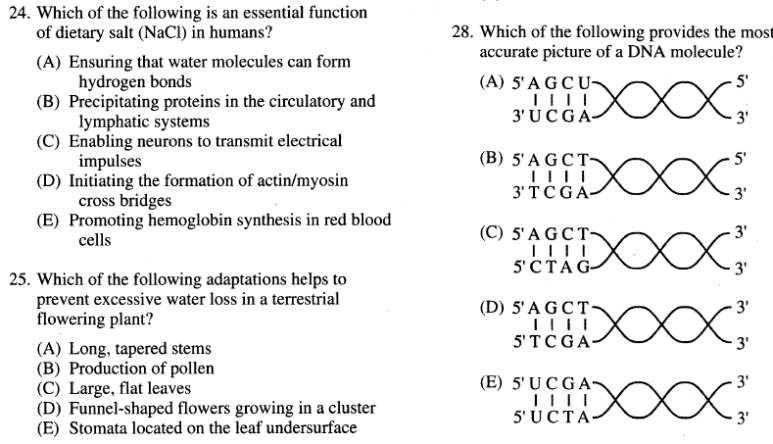
Sometimes AP Biology free responses feel easier than the multiple-choice questions. Written answers need the key concepts. Students mistakenly assume a longer answer earns more marks, but what matters is including the required points and explaining them accurately.
Because there are not so many available AP Biology past papers, I recommend doing them two or three times. The top-scoring student above did them three times, because some mistakes persisted after the second pass. Repeated explanations helped fix the material in memory.
Fortunately, the exam largely matched what we had studied, and the student found the written section manageable and earned a 5.
Perhaps because it is the hardest subject, I have not had many top scorers. I still vividly remember how much some students struggled.
Some could not understand the question’s wording; others could not choose between two confusing options.
Running out of time was common, and some never became fast enough. That is how demanding I find the subject.
Yet students did earn 5s, and they had all worked through past papers at least twice.
They also practiced written responses repeatedly. It sounds simple, but it is not easy. A complete set requires sustained concentration for an average of more than two
hours. I often assigned half a multiple-choice section and half a written section at a time.
I know that completing a full paper in one sitting is not easy for students.
From experience, I think thoroughly analyzing past papers is the best way to study AP Biology.
SAT season is approaching again, and I remain confident that I can help many students earn perfect Chemistry scores.
For Biology, I am more cautious: depending on the students’ circumstances and a little luck, I hope some may reach 800.
Conclusion
SAT Chemistry is the easiest in my experience,
and AP Biology the hardest.
Learn with a good teacher.
The best study method is plenty of realistic exam-question practice.
Feel free to ask if you have any questions.