Grace's experience and study approach
Grace has spent 10 years tutoring many Korean students and has extensive experience teaching at international schools. She has kept developing her teaching rather than simply relying on the school role. Her IB and AP Biology results are exceptional. I wrote this post based on her teaching approach. To do well in IB Biology, strong foundations matter, but so does completing as many available past papers as possible. The content is so extensive that trying to memorize every page of a textbook is less efficient than understanding the material and becoming familiar with it naturally through substantial question practice.
https://tv.naver.com/v/14179912
https://tv.naver.com/v/14179912 ↗The sheer amount of content is what makes students struggle. There is so much that you can forget it almost as soon as you look away. Making summary notes is one approach. Reviewing those alongside past papers helps more knowledge settle in your mind. As that knowledge accumulates, IB Biology can eventually begin to feel manageable.

The structure of IB Biology and how to study it
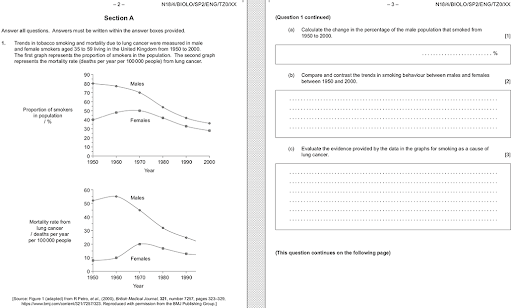
IB Biology has HL and SL courses. HL naturally has more questions and longer exams, and the gap from SL is substantial. SL isn't easy, but its smaller volume makes it relatively more manageable. At SL, accurate understanding may matter more than handling an enormous memorization load. HL can feel fairly straightforward at first, but the amount to remember grows dramatically and eventually exceeds what you can absorb all at once. Avoid relying on memorization from the beginning. Understand what can be understood to reduce what must be memorized. A capable teacher who helps you understand the course fully can be an efficient route. Blind memorization can make the final exams very difficult. At schools, strong Biology students often solve huge numbers of past papers. Watching them, you might think practice alone is enough, but practice with understanding is entirely different from practice without it. Doing many questions is a good habit, but it can still be ineffective if understanding is missing. SL has less content, though it remains a burden alongside five other subjects. Compared with other courses, I think the difference between HL and SL is particularly large in Biology. Memorizing the SL content may be feasible, but when students miss a question with slightly altered wording, the problem often isn't poor recall or a careless mistake: it's lack of understanding. Even when memorizing, resolve anything you don't understand by asking or reading until it makes sense. That is what helps you handle unfamiliar wording.
Teacher discretion in IB Biology and the IA
Unfortunately, school grades can vary greatly with the teacher. Written answers leave room for subjective judgment, especially in Biology, where explanations can be longer than in other science subjects. I've seen teachers mark an answer wrong over a small concern, then restore the mark when asked about it. The inconsistency is frustrating. Even so, study how to identify and use the necessary keywords. If the essential points are clearly present, it is harder to justify withholding credit. A harsh school environment may lower internal grades yet provide enough practice for stronger final results. The IA can be even more complicated. Students draw on a broad range of online information, and a teacher may not know every specialized topic. As a result, errors may be missed or correct material challenged. Clear structure and writing help address that. Follow the IB's stated format as closely as possible and write concise, appropriately technical sentences.
Past-paper practice cannot be emphasized enough
I'll say it again: use past papers to resolve as much as possible. Preparing summary notes alone won't necessarily produce a high score. Personally, I think past-paper work matters more than making summaries. Solve many questions, and ask a tutor about even small uncertainties. If you work through each issue, the Biology content can become organized in your mind without constantly returning to a separate summary. Thinking that a neat set of notes is enough can be risky. Do enough past-paper practice to understand the material and recognize the exam's patterns. To be direct: do 15 sets at least three times each. There are typically two sets for each year in the material discussed here.
IB Biology's difficulty and how to approach it
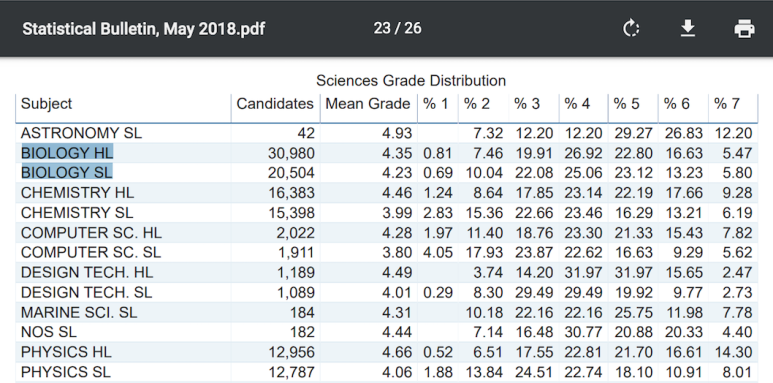
I don't think a 7 in final IB Biology is easy to achieve. Internal grades may be more accessible depending on the teacher, but I'm talking about the final compared with other subjects. The IB material I referred to showed a relatively low proportion of top grades in Biology. So prepare thoroughly. That doesn't mean solving every question in every book on the market, haha. A thick basic textbook isn't necessarily needed; we need to save time. A concise resource that doesn't omit required content can be enough. A tutor can help make the understanding clear, although that depends on the tutor. If they provide a suitable set of materials, those may be sufficient. But do at least the latest seven years of past papers, with the available two sets per year, three times as complete sets, and resolve every unclear point. That's what I mean by thorough preparation. With a concise main text, this should be manageable alongside the other five subjects. Lessons with Grace are another option for saving time.
Spending less time on the IA can also be a strategy
The IA, the IA, the IA—the thing students dread. I know many find it difficult. That makes suitable guidance especially valuable. Someone without relevant experience may not be able to help much, and simply asking them to look over it may not be useful. Seek advice from an experienced teacher such as Grace so that your effort is efficient and produces the best result possible.