Experience—and the large role of teacher discretion in IB Chemistry
Hello, this is JjangJi. After teaching IB Chemistry for many years, I've worked with a great many students and seen the same questions and content dozens of times. I feel I could teach some lessons with my eyes closed. Once you've taught a three-digit number of students, it starts to affect you physically. Honestly, it can become repetitive. I seem to have solved the available questions with students dozens of times. That experience has helped me explain how students can achieve high scores. But unfortunately, the first point I want to make is that school teachers' discretion can have a very large effect on IB grades.
No matter how hard students work, high grades are difficult if their school teacher is habitually a harsh marker. Marks may be deducted for all sorts of reasons. If nobody in a class receives a 7, that says something. Conversely, a teacher who marks generously may make a 7 achievable with much less work. In my experience, the latter is more common, but students in the former situation are unlucky. Multiple choice leaves little room for discretion, but explanations are different. An answer similar in meaning to the mark scheme should earn credit, yet I've seen teachers refuse marks because the wording wasn't identical. I've even seen spelling mistakes cost marks. In those circumstances, a high Chemistry grade is harder to obtain. Still, overcoming the situation is part of developing your ability. If you work hard and understand the teacher's expectations accurately, you may achieve good results. Honestly, though, there are limits when a school awards no 7s in an entire class. I've seen it too often.
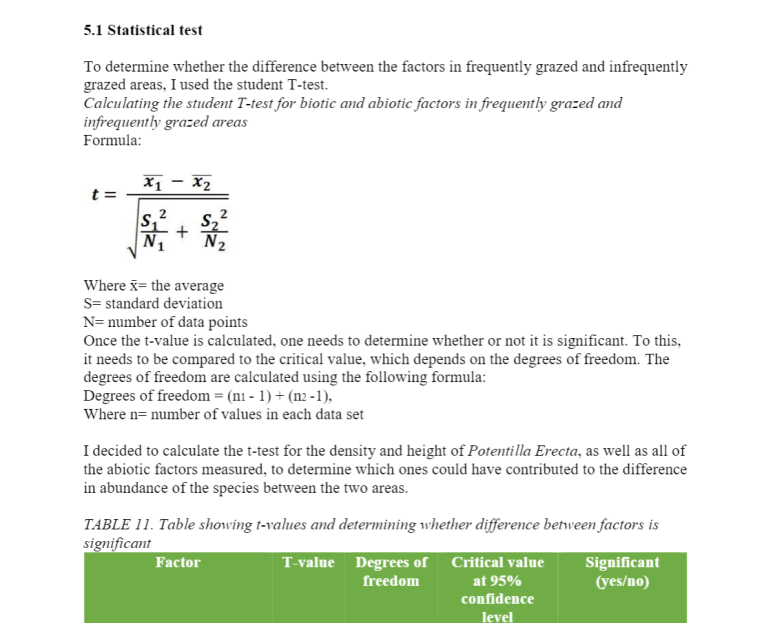
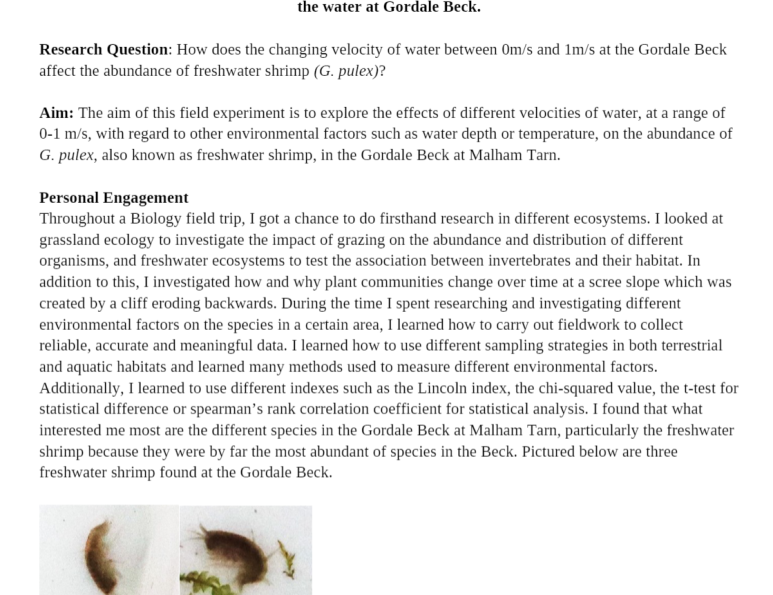
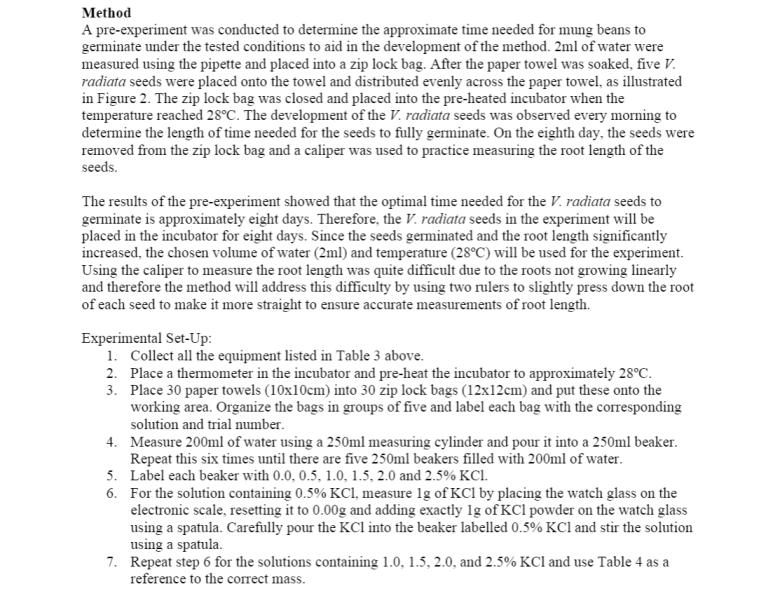
The IA is where teacher discretion matters most.
In my experience, a Chemistry teacher's discretion can strongly influence an IA grade. External assessment by the IB is a different situation, but not every student's work is individually marked that way. I've accumulated extensive examples and experience from reading students' IAs, and through study and practice I've learned what makes particular sections effective. Yet when I compare stronger and weaker IAs and predict their grades, the actual results often surprise me. Sometimes two IAs happen to be very similar but receive very different marks because the schools and teachers differ. I've even seen significant theoretical errors overlooked when the teacher didn't recognize them, resulting in a high grade based largely on format. Experiences vary enormously. Of course, an outstanding IA with little to criticize should score highly with any teacher, but those cases aren't common, so we need to consider typical work. Many IAs are broadly similar; truly unexpected ideas or exceptional writing are rare. I can judge which report is stronger, especially after reading more than 50 Chemistry IAs, but student effort doesn't always explain the grade. Teacher discretion often intervenes. Nevertheless, there are ways to write an IA and a format to understand. Learning those and following them can help, alongside an accurate explanation of the Chemistry.
View original messages

View original messages

View original messages

View original messages

View original messages

View original messages

A subject with a relatively small gap between HL and SL
I think the gap in the amount of HL and SL Chemistry material is smaller than in some other subjects. Broadly, they cover similar areas, with HL going deeper. You could reasonably say that extra depth is itself a difference in scope. My point is that even material developed at HL often requires some basic understanding at SL. In the syllabus discussed in this post, the core topics were numbered 1–11, while the additional higher-level material revisited those areas in greater depth. For SL students, the most frustrating part may be the first topic, Stoichiometry, because its scope is shared with HL. Someone who chose SL expecting an easier course may feel caught out immediately. Stoichiometry is not one of the easiest parts of Chemistry, and the score gap between HL and SL students can be unexpectedly large. An SL student's result may be much lower than expected because of their approach. HL students often choose the subject knowing they need to work hard, while some SL students select it simply because they have few alternatives and study casually. With that mindset, an opening assessment on material shared with HL can be a shock. Take this section very seriously. Unfortunately, one of the hardest areas comes first, so this is a subject that requires effort from the beginning. Some later topics offer more breathing room.
Small details that cost marks: significant figures and more
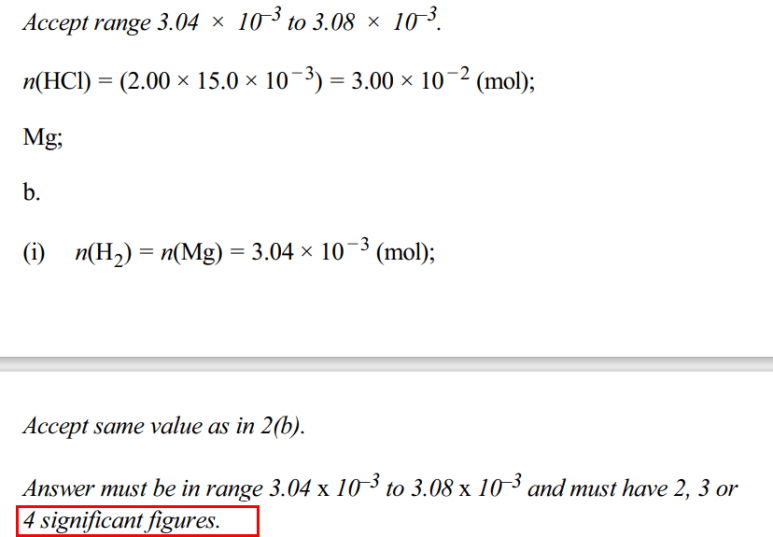
Before their first IB Chemistry exam, students may think older students got low grades simply because they didn't work hard. Sometimes that's true, but hard-working students can also score poorly. Ironically, they can even score below classmates who studied less, because they missed small details. Studying alone can leave you convinced that your own approach is right. A little advice from an older student or tutor can make a huge difference; without it, the consequences can be serious. Significant figures are a typical example. Marking differs by school, but I've seen schools give zero credit without prior warning when significant figures were wrong. Since Stoichiometry comes first, many students leave the exam thinking they recognized lots of past-paper questions and did well, perhaps even got everything right. Then they receive about half the marks, with comments saying the method was right but the number of digits was wrong. It's a small but important issue. Stoichiometry assessments can also include applications not explicitly covered in lessons. The difficult thing is that students may only understand what the course demands after taking that first exam. Students who start well are fine, but I've seen others become discouraged, want to change subjects, or cry that Chemistry doesn't suit them. Getting the beginning right matters, especially in IB Chemistry. Listen carefully to older students and tutors. Of course, finding someone who gives useful advice is itself a stroke of luck.
It isn't over when it feels over: Organic Chemistry
Even if students do well in Topic 1 and manage the middle of the course, Organic Chemistry can bring their anxiety to a peak. After about a year of study, when they're already tired, they face a large amount of new work. Many feel mentally exhausted, or are worried about disappointing grades, and quietly give up on the final topic. That is dangerous. Some material may be less central, but in the past papers discussed here, Organic Chemistry could account for roughly one and a half to three of seven written questions, with at least one full question. Giving it up was effectively giving up on the final exam. It has to be studied. But not every teacher can explain Organic Chemistry well. It differs considerably from much of the rest of the subject and benefits from particular experience. Through teaching Korean medical and pharmacy entrance preparation, patent-attorney exam preparation, and university students, I've read and organized a wide range of Organic Chemistry textbooks, so the material comes readily to me. How many tutors have had that experience? I know of tutors who have to puzzle over organic questions alongside the student. A poor match can seriously disadvantage the student. Regardless, don't give up: keep working steadily, even slowly. I receive many inquiries when schools reach Organic Chemistry and have to be selective. Some students tell me they've decided to abandon it. That is a recipe for a poor exam result. I gently turn those cases away because I can't realistically help them reach a high grade under that condition. It's painful for both teacher and student. I also receive quite a few calls from students who have done little for a year and want a final rescue. In those cases, I may work through nearly all the past papers with them daily for about two months. If they review and keep up, a high score can still be possible. But if they insist on abandoning whole sections, there is little I can do. Don't discard the final topics. Identify the key ideas and study them step by step. I also think tutors bear some responsibility: many students arrive after academy or private lessons without understanding the material, having lost a great deal of time. Finding a good teacher matters.
View original messages

View original messages

View original messages

View original messages

View original messages

Past papers are the most important resource
Past papers matter in every exam subject, including IB Chemistry. I'm completely confident that no combination of ordinary workbooks and textbooks is a better exam-preparation resource. At the time of this post, at least 20 sets could be found, and I encouraged students to approach the course intending to complete them all. A particularly risky method is buying one thick textbook and slowly reading from the beginning. Of course, a student who reads quickly and understands thoroughly may be able to do that and then solve questions. Most cannot: Chemistry is only one of six IB subjects, and they may also have TOEFL, SAT, and AP preparation. Be careful of the idea that reading a thick textbook alone will be enough. Begin past-paper questions by topic. Once enough content has been covered, start completing whole sets. By 'complete them all,' I don't mean once and then discard them; I mean at least three passes. Working through 20 sets three times helps recurring question types become familiar. Material that seemed unclear in the textbook often becomes understandable through practice. Looking across my strongest students, they generally worked backward through at least 20 sets of past papers. Many who repeatedly exhausted the past papers before moving to other workbooks received their school's Chemistry award. Treat past-paper practice as a major priority. But don't merely decide to solve as many as possible without thinking. You must understand them. A habit of blindly answering and checking solutions is difficult to undo. Study carefully and understand the principles. Understanding means remembering why something works a week or a month later. Mere memorization without that understanding is not enough.
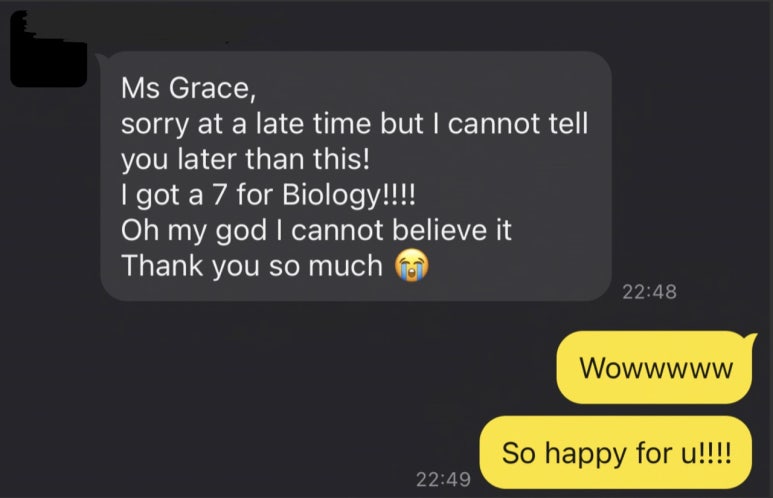
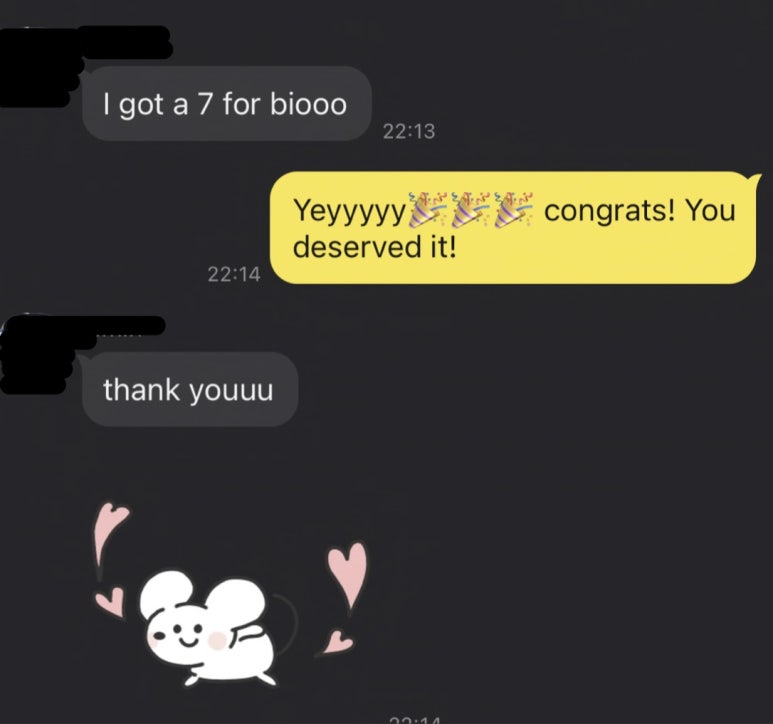
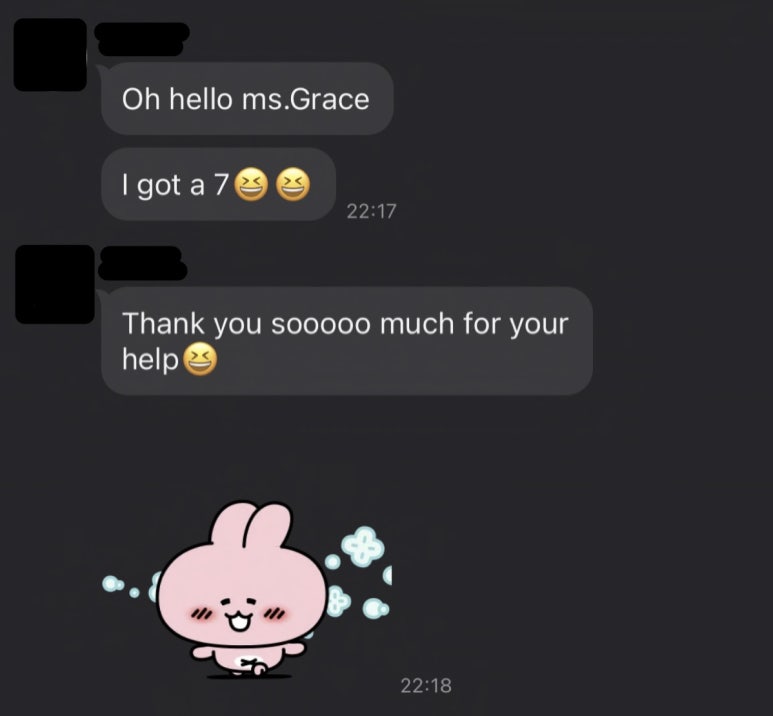

The IA is not as overwhelming as it seems
Many students worry and struggle over the Chemistry IA. My students often finish most of it during the holidays before returning to school. People ask how that is possible, but with guidance beside them, it can move quickly. I've received countless requests to review IAs and accumulated enough examples to recognize a strong one at a glance. Some students draft an entire Chemistry IA in a day, then refine and correct it into a strong report. I've seen students do that, earn a 7 for the IA, and enter good universities. I've also seen students hold on to the same IA for months, which can make everything increasingly tangled. If Chemistry were their only subject, that might be manageable, but they have all the others too. Finishing efficiently matters. The route needn't be terribly difficult, so learn the method first. I don't want students or parents to be frightened of the IA. Many are so anxious that even when I say it can be completed promptly, they don't believe me. Then, once it's finished in the holidays, the worry is forgotten. Efficient work does benefit from support. A common pattern when students work alone is to write everything, dislike it, throw it away, and start again. They don't know whether their IA is on the right track. It's their first one, and they may never have seen another, so naturally they struggle. But there are good, efficient methods. Find the method first; the writing can then be done in a week. If you rush in without an approach, you may spend one or two months on the IA alone.

https://tv.naver.com/v/21188587
https://tv.naver.com/v/21188587 ↗Closing thoughts
Unlike Korea's CSAT, IB Chemistry school grades can vary considerably with teacher discretion. Doing well in that environment requires strategy. Whether a teacher likes a student is a separate issue. There are definite methods for earning exam marks and for improving a Chemistry IA. Don't ignore those methods and simply study harder without direction. Proceed carefully. Listen to older students and teachers around you and learn how to approach the work first. It isn't too late to study after that. And because past papers matter so much in IB Chemistry, invest substantial effort in them. If you keep studying with understanding, good results can follow.
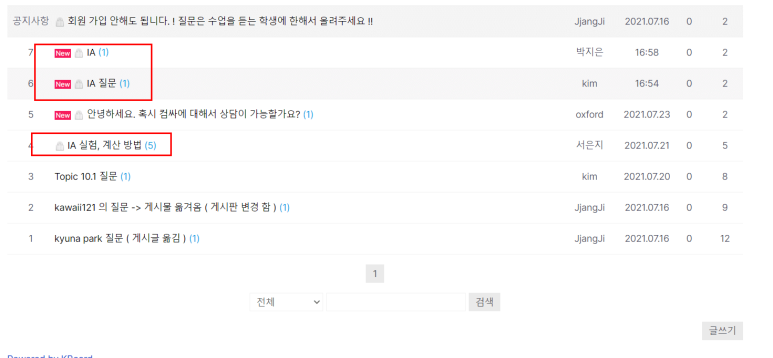
Both IB Biology and Chemistry finished with good results. Thank you so much.
More information was posted at aplecture.com.