Hello, this is JjangJi. A few days ago, I received a message from a student accepted to Imperial, so I'm sharing it here.
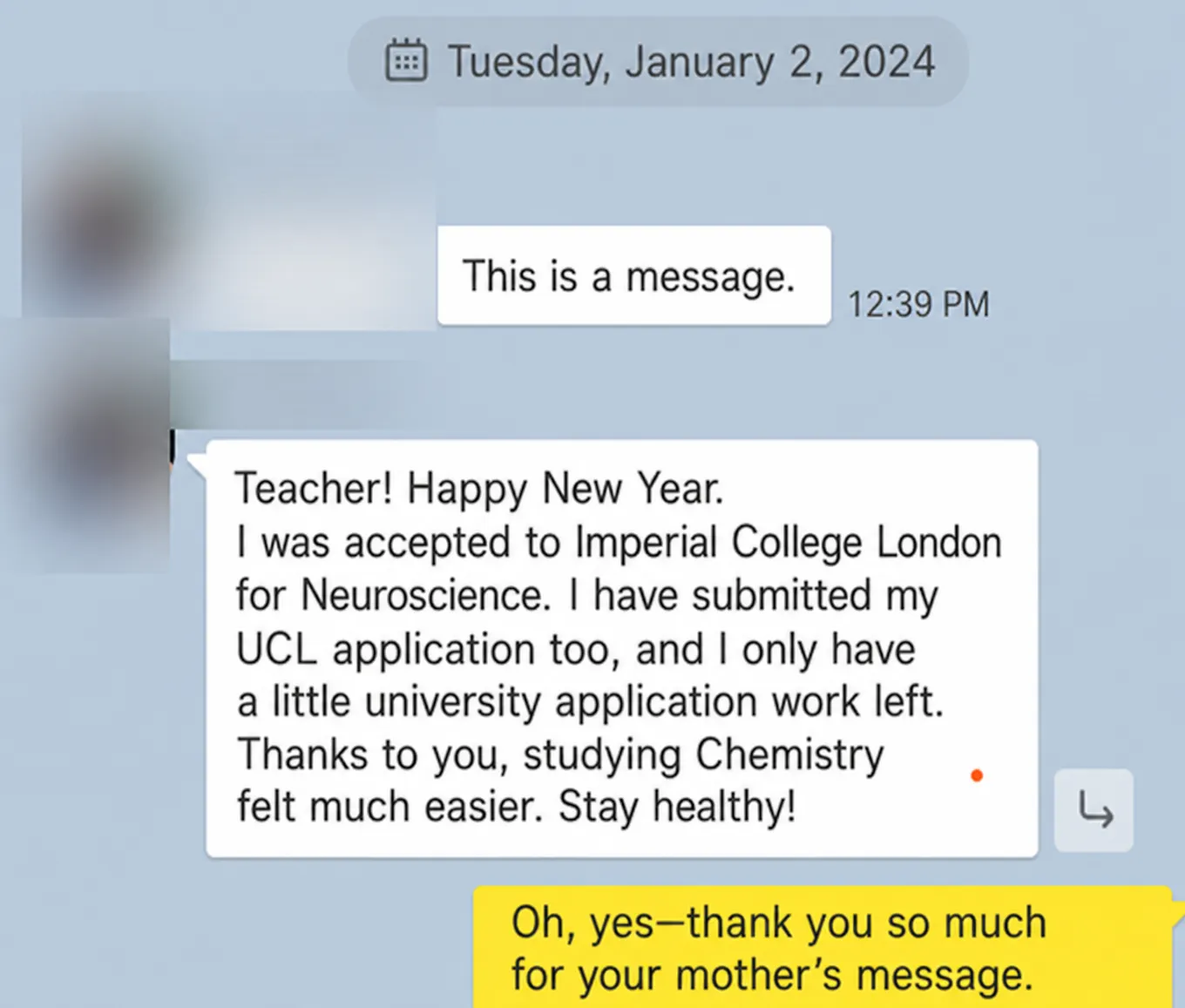
At the time of this post, I described Imperial as a university where applicants generally needed grades of at least 6 across their subjects and 7s in specified subjects to qualify. Many of my students were interested in it. It is among the leading universities in the UK and globally, and its reputation is outstanding—especially in engineering and medicine. But some students decided against it after considering the practical conditions.
A major reason was London's living costs, housing, and tuition fees. As many people know, London can be extraordinarily expensive, particularly for someone coming from abroad. Many students I taught went to the UK, and I also saw students withdraw and transfer to universities in Korea.
Another reason students gave was loneliness and the difficulty of living there. I understand. Some coped with support from a boyfriend or girlfriend. Without relatives nearby, it could apparently be very lonely.
Of course, many students endured those difficulties and graduated from these prestigious universities. Some then joined banks or well-known companies in Hong Kong or the US. The salaries they described were far beyond what I associated with starting work after a Korean university. Former students messaged me after joining companies people would recognize. Although it's a sensitive subject, I jokingly asked what such a famous company paid. The amounts were huge. They said starting annual salaries were over 100 million won, and I imagine they would rise with experience. Some students may have exaggerated a little to show off, but my understanding was that salaries in that range could increase considerably as experience accumulated.
Still, many students who go overseas feel lost. I know this well because so many of my students have attended universities abroad. Some become exhausted and withdraw. I've also seen this at universities in Singapore and Hong Kong, followed by a return to university in Korea. It must be hard. These days, I find students who finish their overseas degrees especially impressive.
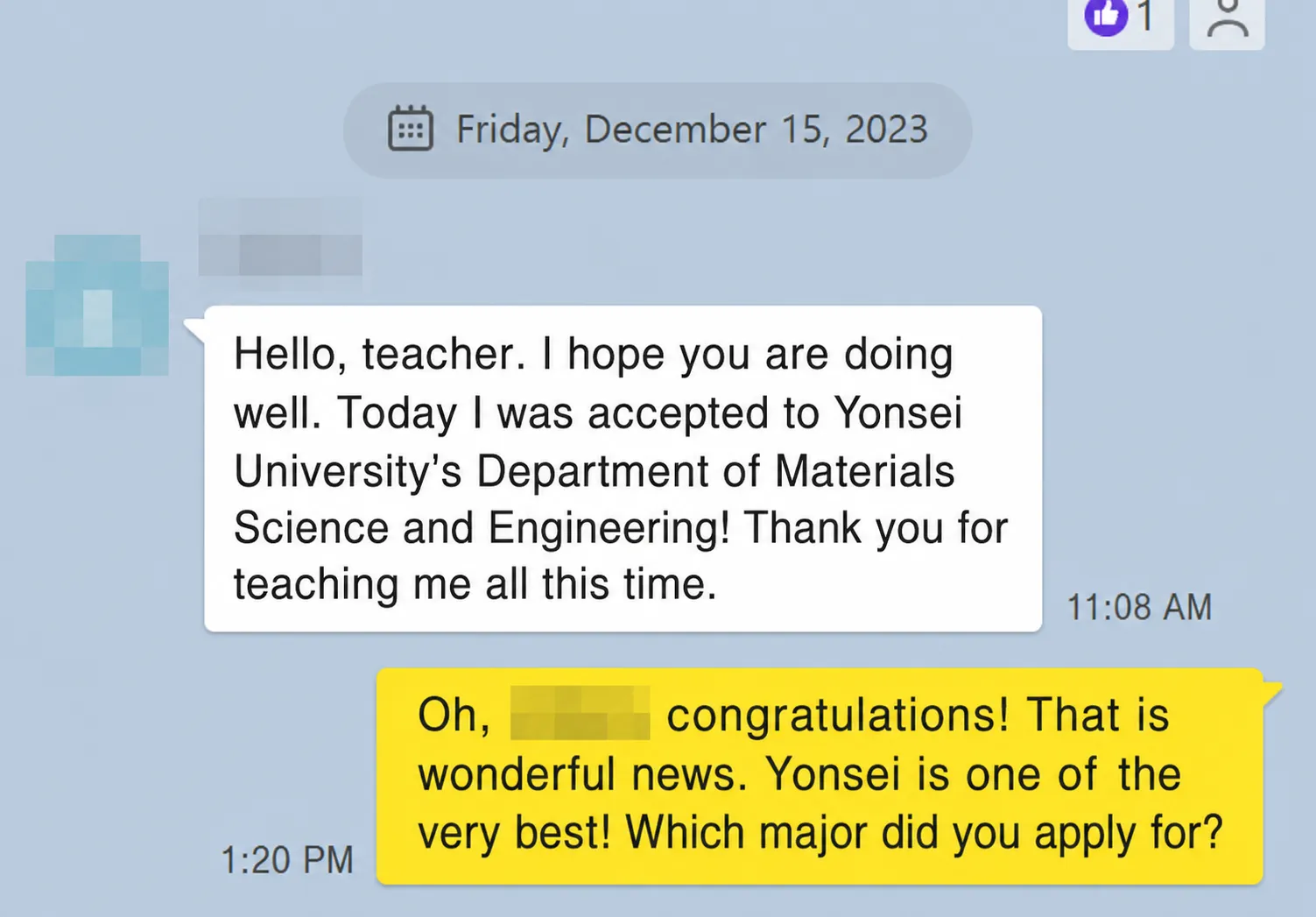
Students who don't go abroad often attend SNU, Yonsei, or Korea University. In my experience, SNU has been much more accessible to students on the 12-year overseas-study admission route than the three-year route. Students on the latter route often aim for KAIST or medical school.
This year, several of my students again went into medicine or pharmacy. Some were on the 12-year route, but others were on the three-year route.
However, medicine and pharmacy are difficult to enter through the three-year route. That is why I encourage those students to take APs and use every opportunity available to strengthen applications to KAIST, medicine, or pharmacy.
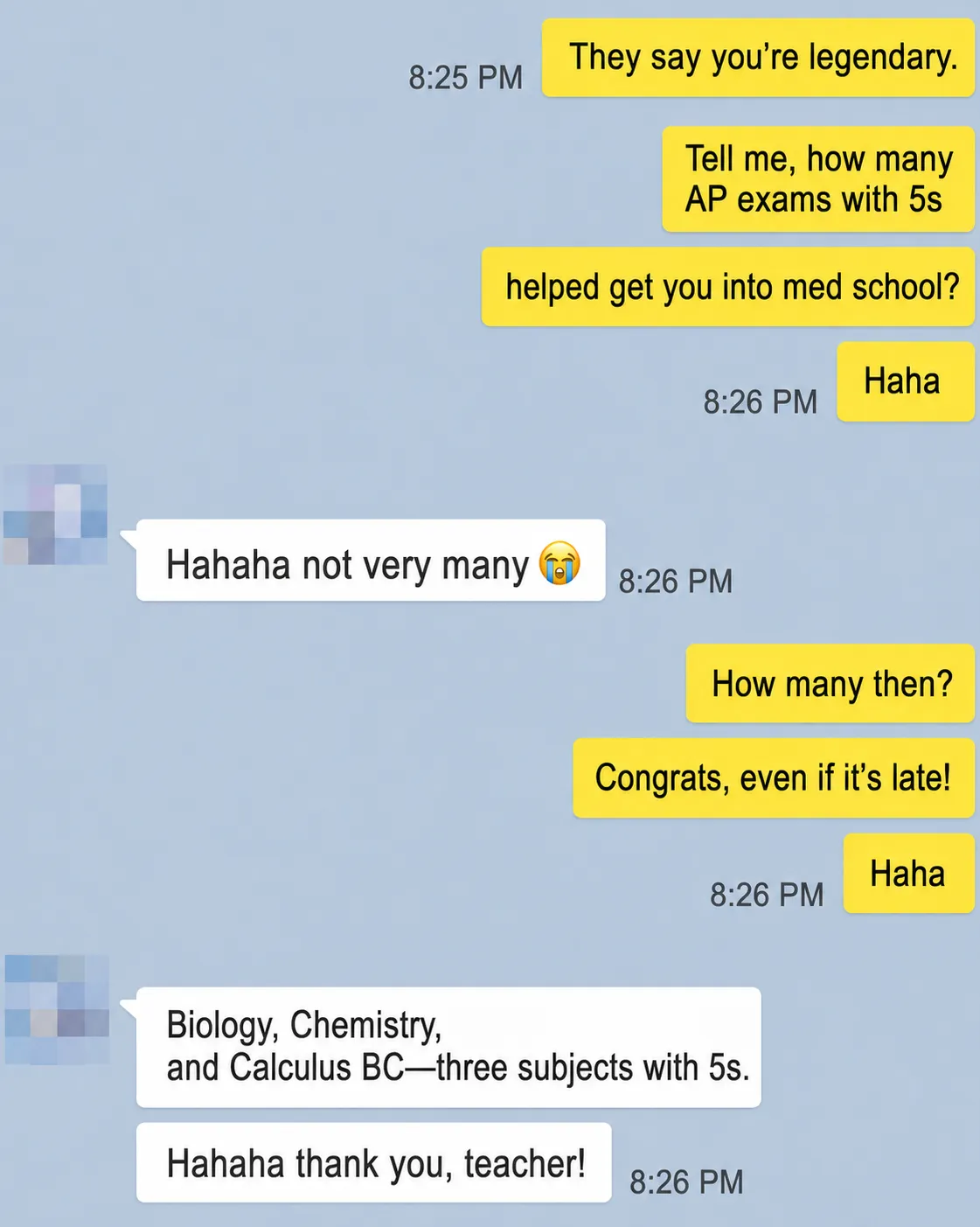
The student above went to Gachon University Medicine. They knew from the beginning that they needed APs. From the cases I've seen, I have accumulated many examples suggesting that AP results help students on the three-year route enter medicine, pharmacy, or KAIST.
Many students also go to KAIST, but I have never personally seen a student get in on schoolwork alone without AP 5s in Maths, Physics, and Chemistry.
Recently, I have received many messages from students describing difficulties after starting university.
There have also been many cases of students returning to university in Korea.
I get many consultation requests, but I need to focus on teaching my current students, so I can't give consultations the attention they deserve.
I often can't reply, or can't reply thoroughly. I'm not really in a position to take many new students either.
Some people may understandably feel upset after a consultation. I'm sorry.
Thank you.