I thought it would help to hear how students who earned 7s in final IB Chemistry studied, so I recently asked several graduates.
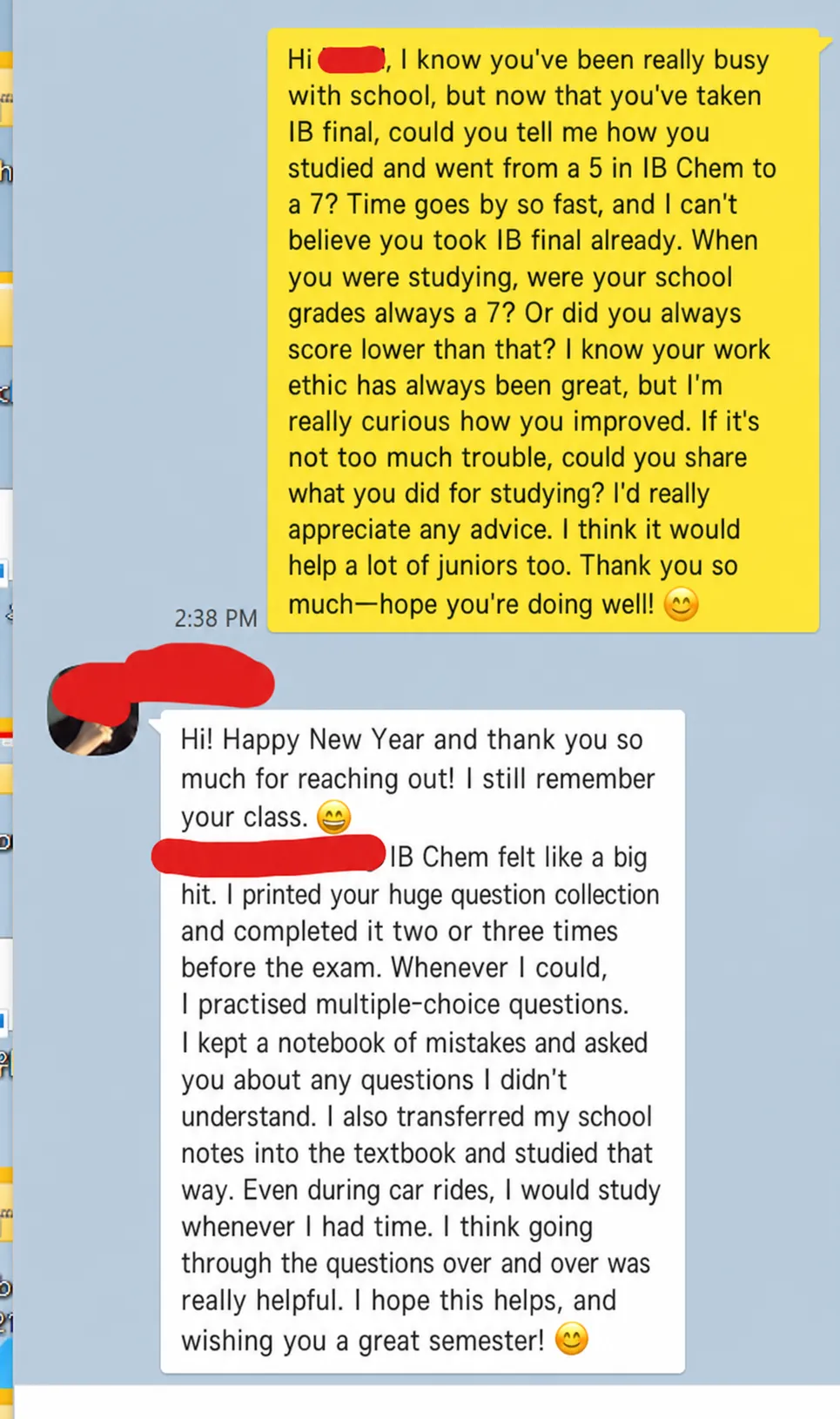
This account describes starting with a 5 on a school exam and working up to a 7.
I began by asking, 'How is university life?' Then I said, 'The younger students are about to take their IB Chemistry finals. Since you got a 7, they'd like to hear your experience. Could you explain how you went from a 5 to a 7?' The student said they initially got a 5 and were shocked. I removed a little of what followed because it was sensitive. They then printed my question book and worked through it two or three times—and that book is 3,000 pages! They did multiple-choice questions whenever they had spare time, made a notebook of mistakes, and asked me about anything they didn't understand. They also worked hard in school lessons and transferred their notes into the textbook. What amazed me was that they even studied in spare moments while traveling by car.
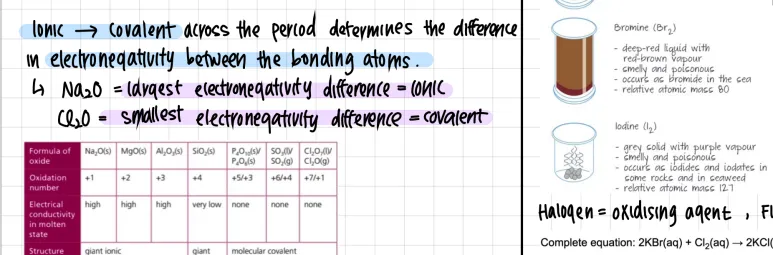
For reference, this student's revision notes are so well organized that I received a copy and use them myself.
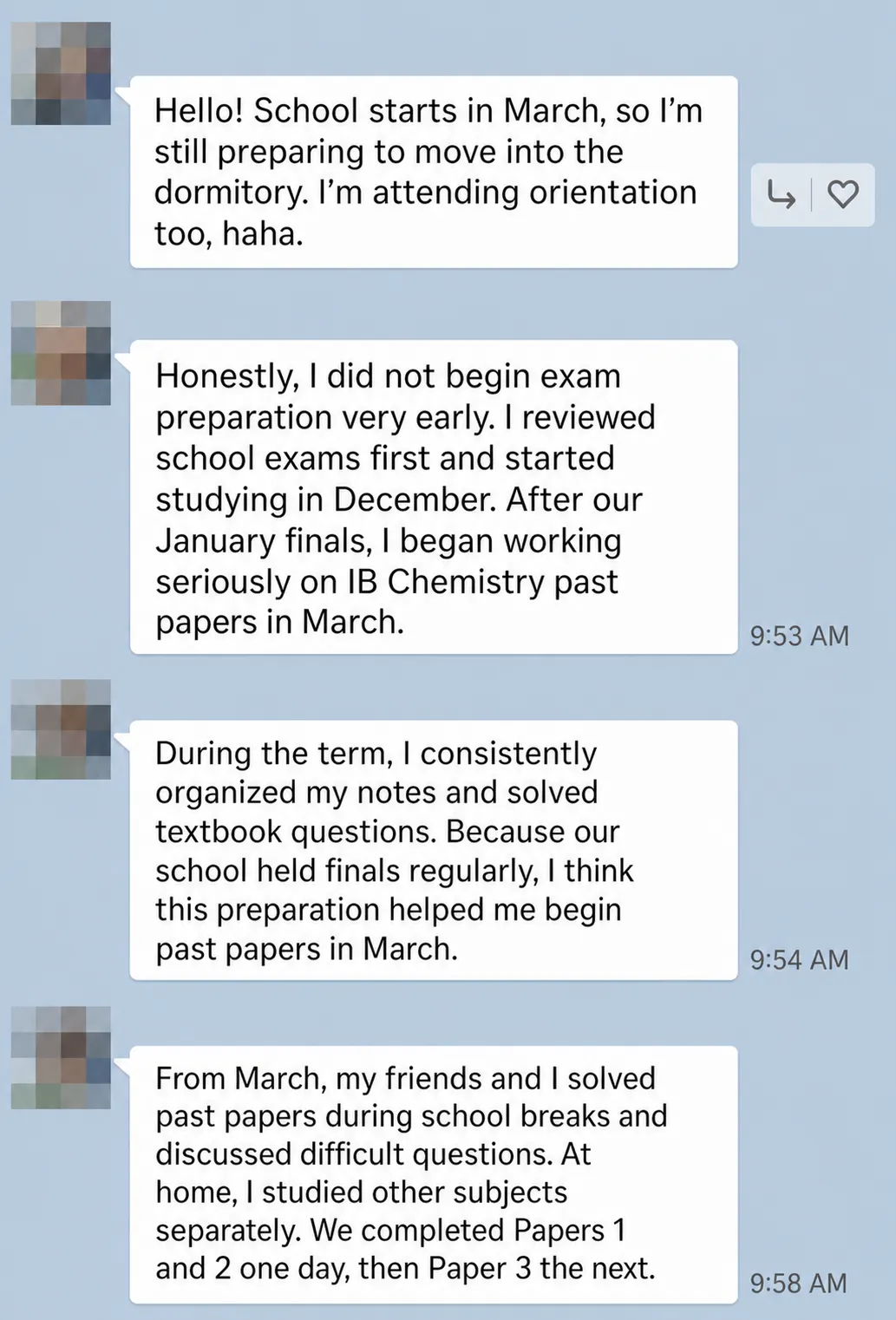
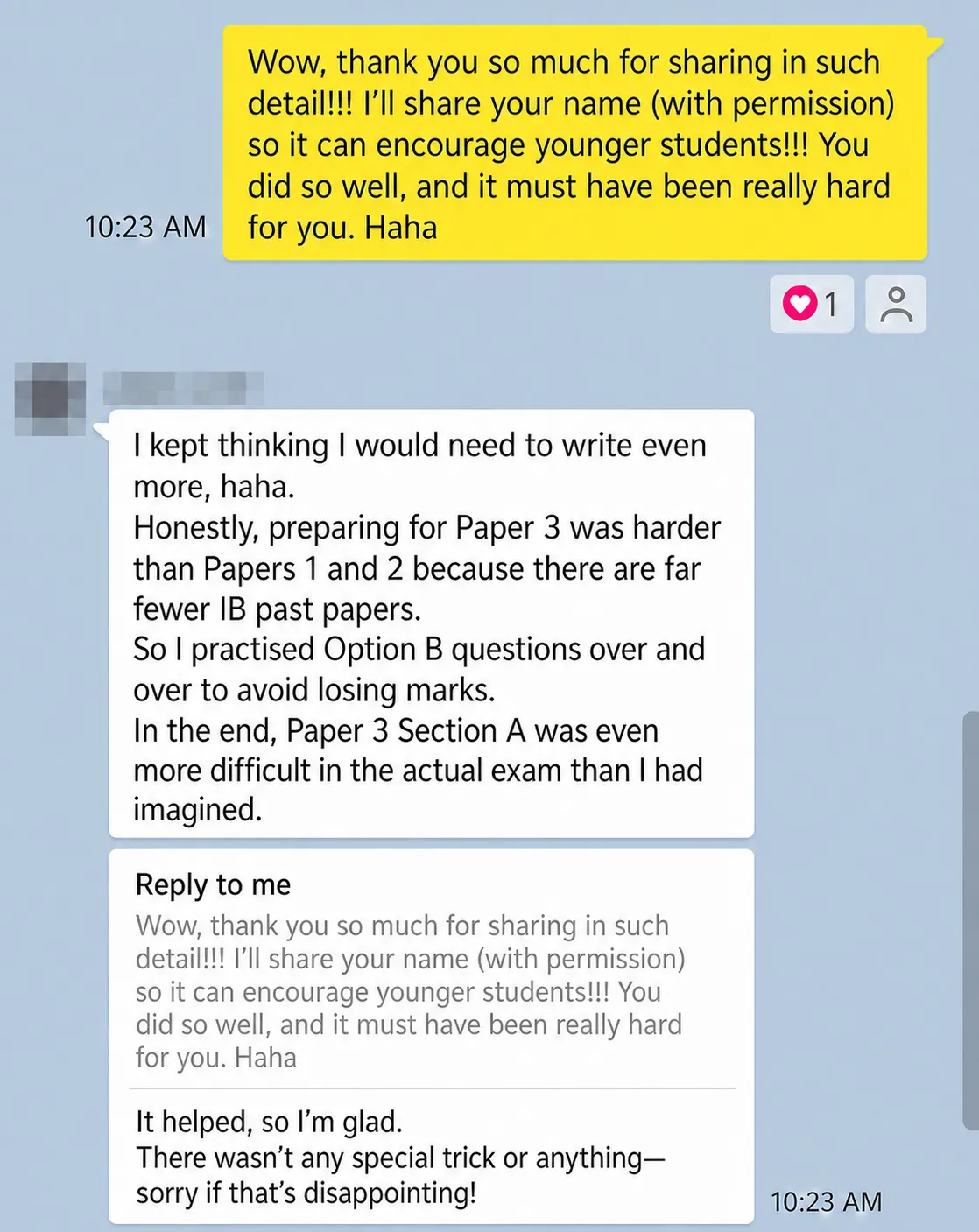
Wow, this next account is very long. Going through it in order, this student had started university and moved into a dormitory.
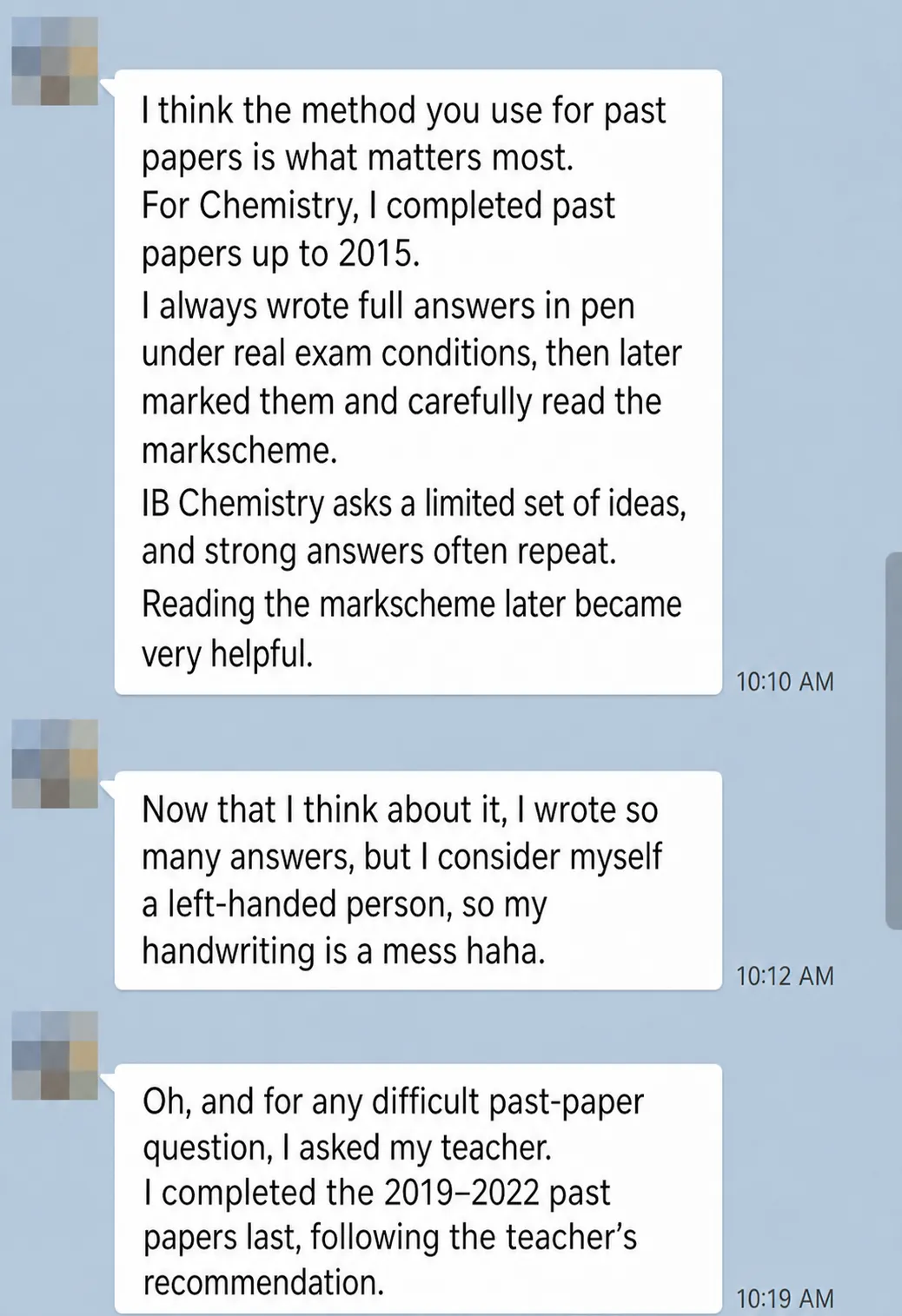
They said that during the school year, they kept organizing notes and doing textbook questions. Their school held regular internal exams, and they began serious IB Chemistry past-paper practice in March. During school breaks, they solved past papers with friends and discussed questions they didn't understand. If they did Papers 1 and 2 one day, they did Paper 3 the next. They emphasized how they completed each paper: they always wrote full-sentence answers in pen, as though taking the real exam. Then they marked it and carefully read the mark scheme. In the end, they said, IB Chemistry asks about a limited range of things, and answers to recurring questions are often similar. They always asked JjangJi about anything they didn't understand. They saved the newest papers for last. In the actual exam, Paper 3 seemed difficult, but they approached Section B determined to get every question right. (The separate Section A/B arrangement described here no longer applies under the syllabus first examined in 2025.)
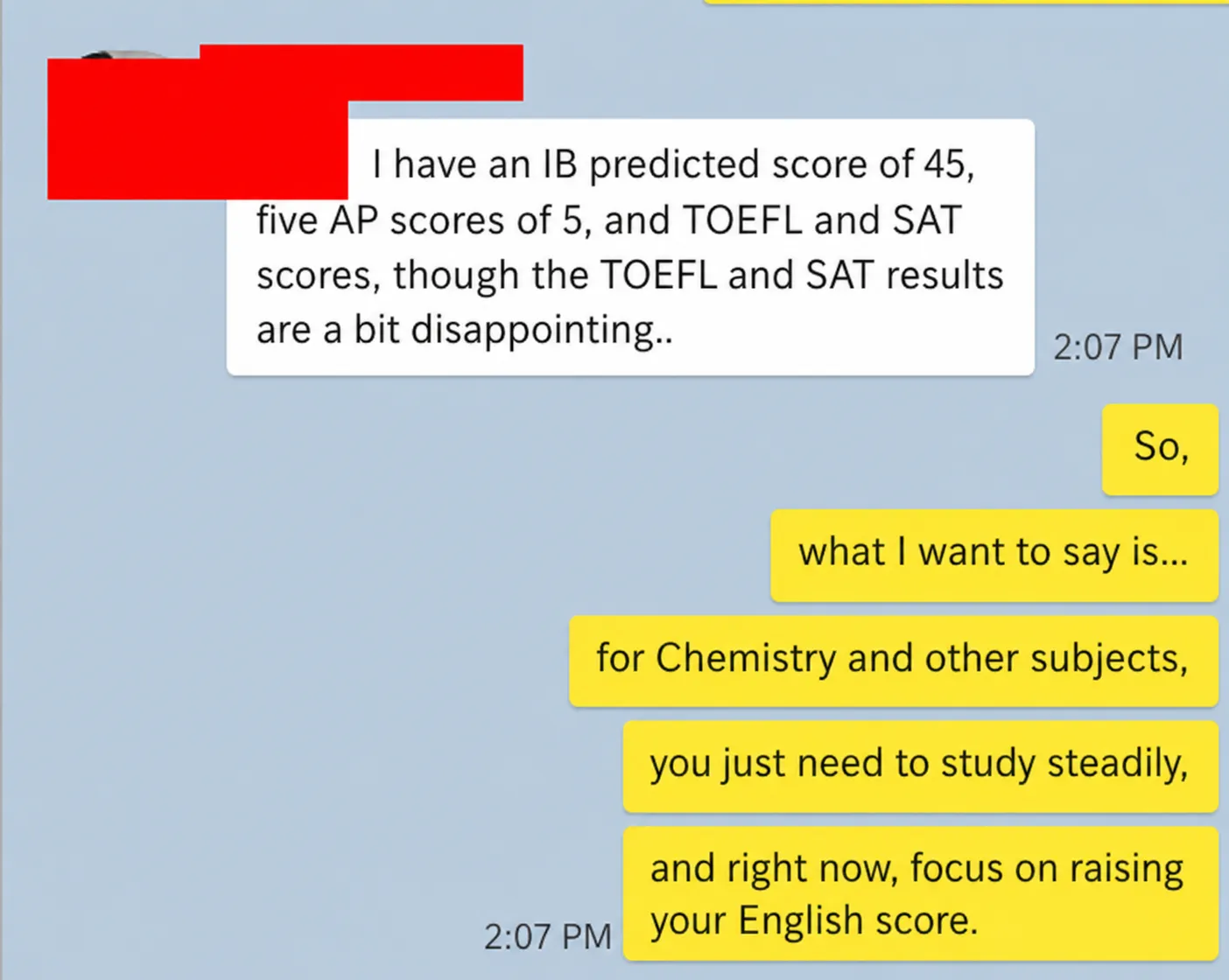
That kind of preparation can produce results like the ones above: eligibility for the 12-year overseas-study admission route, a predicted IB total of 45, 5s in five AP subjects, and high TOEFL and SAT scores. This student is aiming for SNU Medicine. Hard work can produce extraordinary results like these.
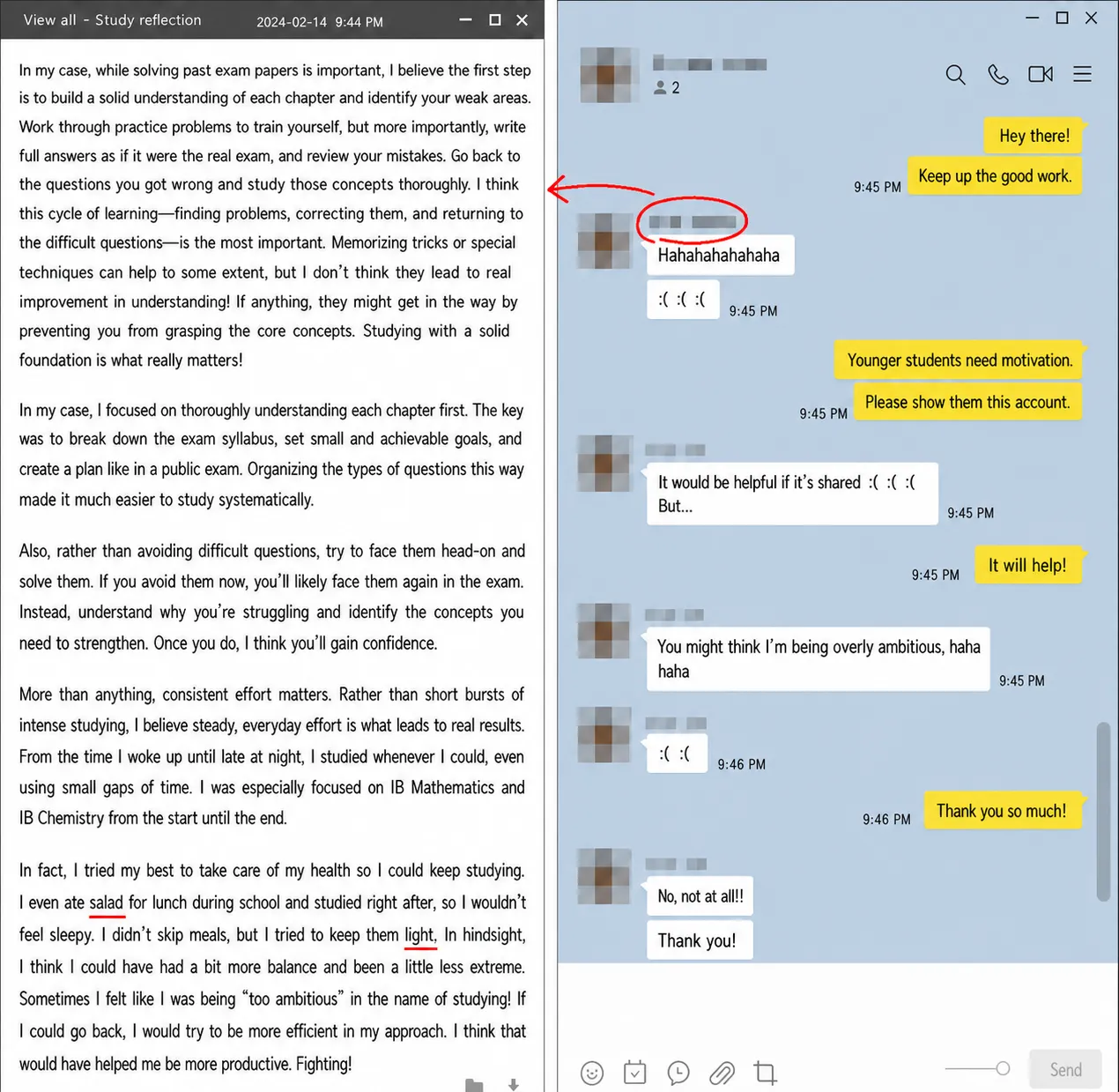
The student above said an important part of IB Chemistry was repeatedly doing past papers, becoming familiar with them, identifying recurring material, and learning which question types to expect. But first, you should thoroughly understand each chapter's concepts and study until you feel confident before solving questions. In other words, avoid blindly doing past papers. They said there was no special trick: they worked hard at IB Chemistry. As you can see below, they even studied so intensely that it affected their health. They ate only salad at school lunch so they wouldn't become sleepy, and spent lunchtime solving IB Maths and Chemistry questions. They really put in an enormous amount of effort.
Some students have not only predicted IB totals of 45 but also at least three AP subjects and high SAT scores.
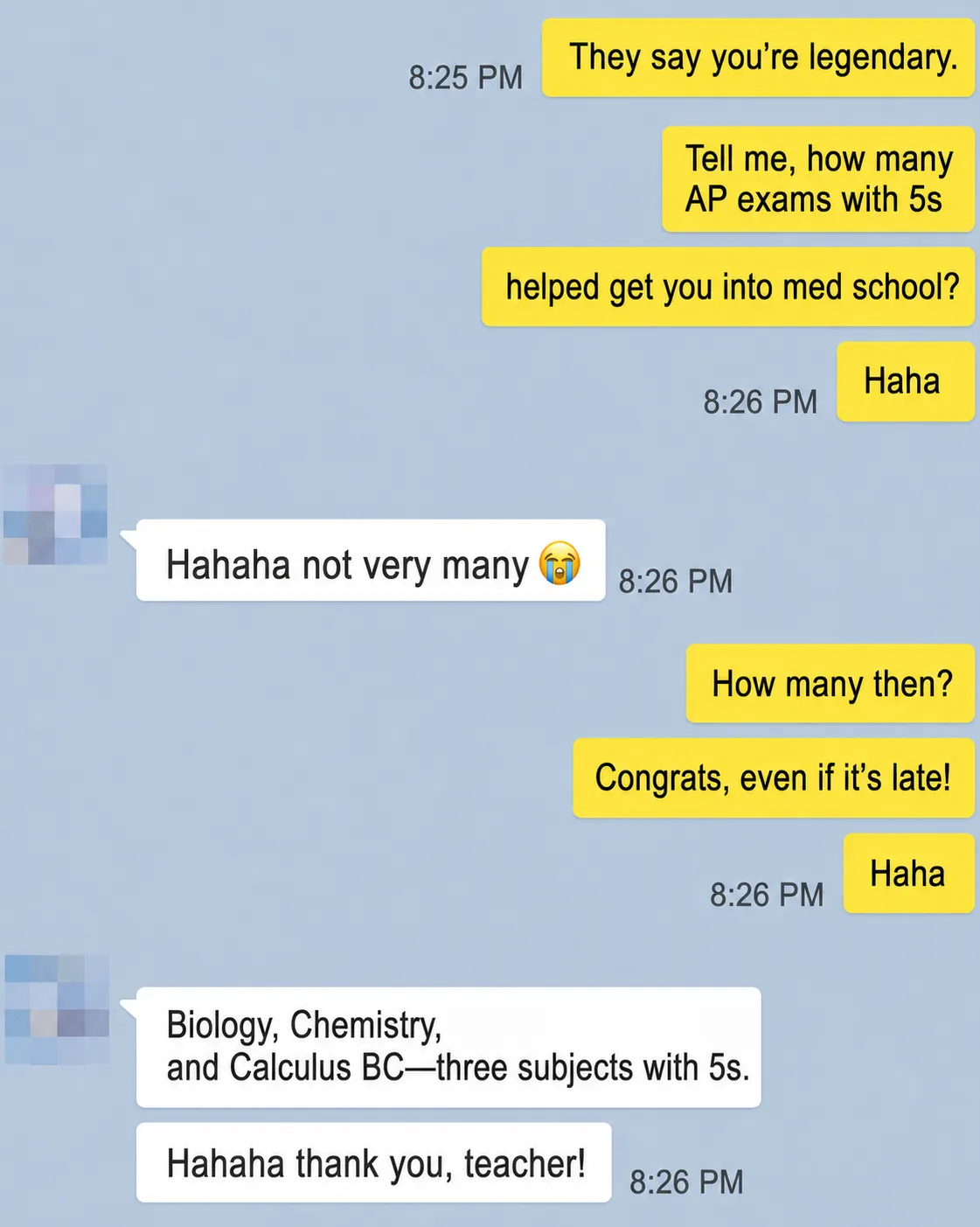
That is the sort of profile that can lead to medical school. The student above went to Gachon University Medicine. My point is that extraordinary results like these still come down to hard work.
You have to work very hard.
Oxford admission story: 2025 University of Oxford acceptance… — Naver Blog
2025 University of Oxford acceptance ↗The student message is cut off at the bottom of the source image and cannot be translated reliably.
View original messages

Inje, Sungkyunkwan, and Gachon medicine or pharmacy admission stories: 2024 IB Chemistry students… — Naver Blog
2024 medicine and pharmacy acceptances from IB Chemistry students ↗The original image is only 120 pixels wide. Several teacher bubbles are too blurred to read reliably and have not been reconstructed.
View original messages
